

Have We Reached the Zugzwang?
MOC gets a little nostalgic for the good old days as he braces the grim reality of the Sixers' current outlook.

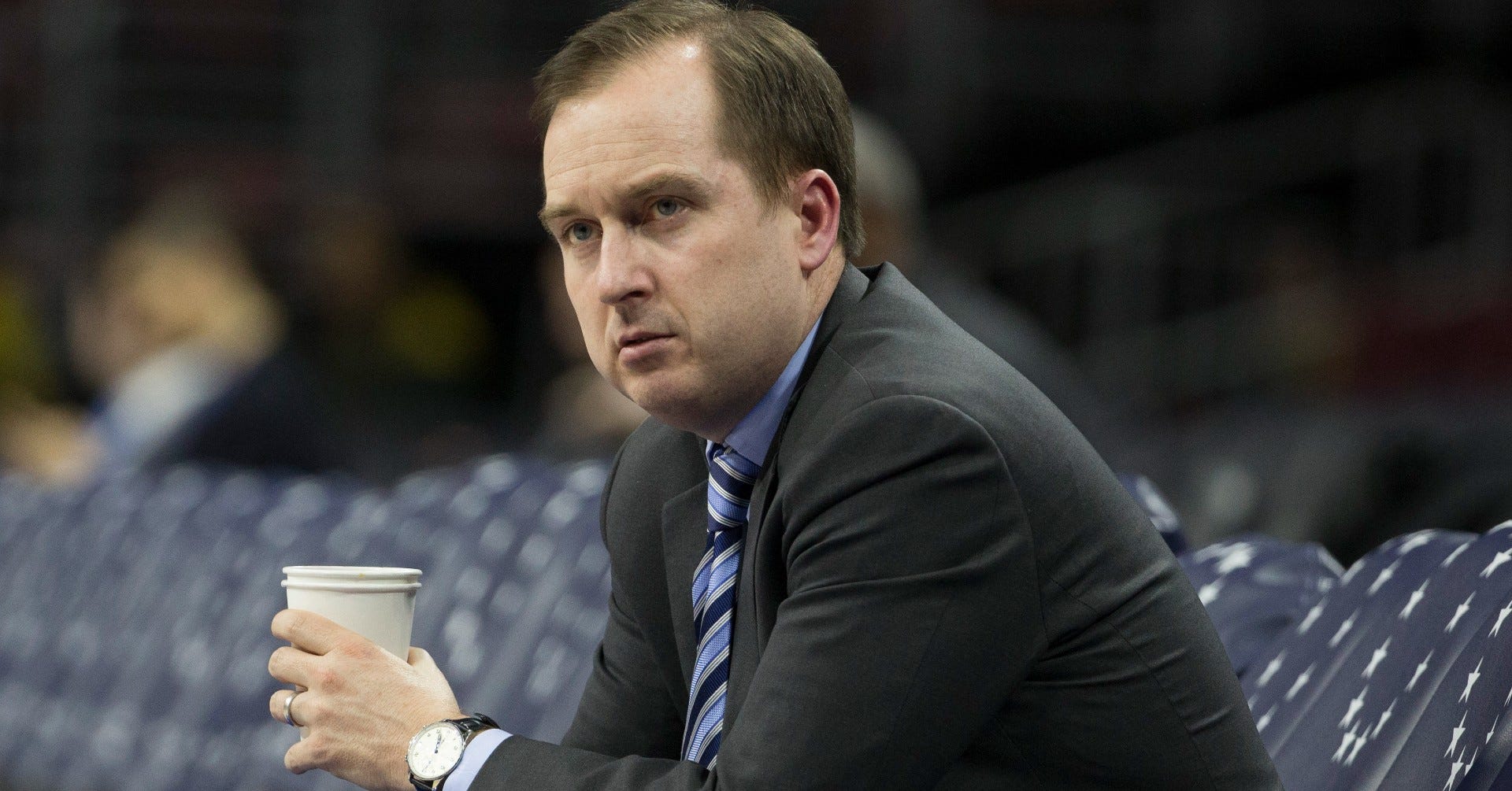
Every once in a while, I marvel at how much the Ricky has changed over the years, while somehow maintaining the essence of what it’s always been. The Ricky has always been great, and it has never strayed from the core of what it is, but it used to represent something entirely different.
If you haven’t been around for 10-plus years, you likely don’t have any clue what the vibe of the Ricky was like during the peak Process years. The podcast and the community around it were not exactly designed for mass appeal. It was more like an ideological cult podcast than a Sixers podcast – it was, in fact, actively hostile towards many Sixers fans. If you didn’t support Sam Hinkie, you would likely be subject to the ire of all within the Ricky community.
There was an “Enemies of The Process” ranking that included random beat writers and personalities on Twitter! The “banned” list used to be much more of a formal thing – if you were on it, you really were banned from the podcast! An average day on Twitter in 2015 was some random Bucks blogger posting something like “Sam Hinkie isn’t that good of a GM, actually” and proceeding to be dogpiled by hundreds of Ricky listeners. It was awesome. I don’t regret a single second of it. It is so crazy that it has grown into what it is now and that I am now a part of it.
Anyway, the reason for the walk down memory lane here is the fact that I’d bet most readers don’t even know what the word in the headline of this article references. “Zugzwang” is a German term describing a situation in chess in which the player is forced to move, but every available move only weakens their position. It was referenced by Sam Hinkie in his farewell letter, almost exactly 10 years ago.

From Hinkie: “The NBA can be a league of desperation, those that are in it and those that can avoid it. So many find themselves caught in the zugzwang, the point in the game where all possible moves make you worse off. Your positioning is now the opposite of that.”
Well Sam, it’s 10 years later, your friend Daryl is now running the team, and I fear that we are now in the zugzwang. It’s a sentiment I’ve been feeling ever since the trade deadline, and I just can’t seem to shake it. I am still more optimistic than most on this Sixers season; I still would bet on them making the playoffs. But with the season teetering on the brink, I’ve been wondering more and more about the long-term outlook. And I just can’t help but wonder if their current long term position is the zugzwangiest that any team has ever zugzwanged. Every move – including standing pat – seems to be the wrong move.
I just want to run through a quick hypothetical with you. Imagine the Sixers rally to make the playoffs, but lose somewhat honorably in the first round. If they run back mostly the same roster next year and a year or two beyond, they’ll probably win 40-46 games per year and have a shot at winning a round if healthy for the playoffs. If they trade Paul George and picks for either another veteran wing or multiple younger, but inferior wings, they’ll probably win 40-46 games for the next few years and have a shot at winning a round if healthy for the playoffs. If they trade Joel Embiid for a younger, healthier, but worse center – let’s call him Domantas Sabonis – they’ll probably win 40-46 games and have a shot at winning a round if healthy for the playoffs.
They are stuck in the middle with no way out. The idea of running it back, barring a miraculous playoff run, sounds terrible – until you consider that we are in the zugzwang. We’re going to give up picks to get off of Paul George or Joel Embiid in order to potentially bring in worse versions of them, while not getting us either to title contention or to a point where we can bottom out and play the lottery? No thanks.

Let’s dig a bit deeper here. If the Sixers do run back the same core, they’ll have essentially zero flexibility to create a better version of their current roster; assuming they re-sign Quentin Grimes to around $10 million per year and keep the draft pick that they got in the McCain trade, they will immediately be around $8 million below the luxury tax. They could use that money to re-sign Kelly Oubre to a similar salary for next year, though that immediately puts them in tax territory. They could then still use the mini mid-level exception (around $5.7 million) to sign a free agent on the open market – but again, that requires paying the tax.
If the plan is to keep the current roster mostly in place and try to make another playoff run with Maxey-George-Embiid, I’d argue that the best course of action would be to re-sign Oubre and Grimes, keep the draft pick, use the mid-level exception, and be ready to package some of those guys along with 1-2 first round picks in a trade for a young, starting-caliber player. Let’s call that player Santi Aldama. That would, once again, require paying the luxury tax.
Still; even in that scenario, aren’t the Sixers still just a middle-of-the-pack playoff team at best, banking on a level of health from their stars that they’ll likely never get, while short another couple of draft picks? How is that better than doing nothing?

It only becomes slightly more logical when you consider the alternatives. If the Sixers look to trade Paul George, it certainly wouldn’t be impossible. They will have four trade-eligible first round picks this summer, including that appetizing 2028 Clippers pick. They could try to flip PG and a pick or two for another beleaguered but better aging wing – like Kawhi Leonard or Kevin Durant. They could also try to throw PG and all four of their trade-able firsts to some team willing to offload useful young wings. New Orleans might be a good fit there – PG and all the picks and swaps for Trey Murphy, Herb Jones, and Yves Missi would be nice. The roster suddenly makes a ton more sense. But, uh, are we really going to throw away most of our draft picks between now and 2032 in order to likely be a team that is still banking on Joel Embiid’s health to be anything approaching contender status?
If standing pat does nothing, and trading PG involves huge present and future risk, what about trading Embiid? There will almost certainly be options – Embiid has undeniably played his way into having some level of appeal, if not positive value to teams around the league. But any trade involving Embiid would likely mean giving up picks to bring back a player with less talent than Joel — perhaps Sabonis, as mentioned earlier.
For my taste, I’d go with door number two and trade for one of the veterans – watching Durant or Kawhi, even if they fall off a bit next season, would be pretty fun. They are both all-time greats, still playing at an All-NBA level. Alternatively, if they could trade PG and a handful of picks for the Pelicans package, they would at least be locked into a series of mid-40s win seasons for the next several years, regardless of what they get from Embiid.
I guess part of the reason that this question has been on my mind so much is that my fear is the Sixers will simply keep the same group together, change very little, and hope for the best for the next several years. I think the Jared McCain trade was partially a sign that the Sixers are not necessarily operating with a strict focus on the long term future; if they were, I think they would’ve valued the variance that comes with McCain’s potential much higher. I wonder if their plan is simply to be pretty good for a long time. Perhaps they’ll ride out the next few years bouncing between 40 and 46 wins depending on Embiid and George’s health, and whatever happens, happens. They’ll then hope to set up the next era with the Clippers picks plus Maxey and Edgecombe.
I can’t say I absolutely hate that possibility. I also can’t say I like it. What I can say is that I have no clue how to escape it. I just never thought we’d end up back here – stuck in the middle seemingly with no way out. We are in the exact spot Hinkie laid out in his letter. We are the mid-2010s Hawks, but weirder and worse.
I hope that Morey and company can pull a rabbit out of a hat this off-season to prove me wrong, but given what they just did at the trade deadline, I have a hard time believing that they have all that strong of an interest in winning now or winning later – or at least in doing the things it would take to accomplish either of those. Instead, they’d probably prefer to stay the course, spending the next couple years at a level that’s technically competitive but nowhere near contending, while those of us who still remember the Hinkie era wonder what the hell these last 15 years were all for.
Mike O’Connor is the best O’Connor in basketball writing. Previously of The Athletic, you can find Mike on Twitter @MOConnor_NBA. Mike’s writing is brought to you by Body Bio, supplements based on science, focusing on your gut and brain health.
One of the fun parts of the early process was seeing edge players get some run and discovering guys like TJ and Covington. That door is always there but you need to make room for it. And I'm sure there are long term plays like Saric was available every draft. You do those two things you can at least get the thrill of getting some surprise value seemingly from nowhere. I don't think the franchise should have viewed aspects of that part of the process as temporary. I think it should be baked into their mode of operation. Otherwise your stuck in a zero sum game with other teams and inevitably Zugzwang.
In reply to Rob
Jeez. You really ought to pause a little before just mindlessly disputing everything someone else writes.
Eg: Embiid's value. It isn't purely a function of where he ranks in The Ringer's rankings. In fact I'm not sure NBA execs grant The Ringer much cred at all. But, just for the sake of argument, let's say they do. Embiid's value would be determined by, yes, how well he's playing now but also by the obligations in his (long, big) contract and how well they feel he'll play over the course of it.
His play this season helps, but his availability doesn't. I doubt very many people in the league think a yet-to-start three year max for an oft-injured 30+ player with meniscus issues represents a significant net positive value.