

Is Tanking Really the Problem — Or Just the Number of Teams Doing It?
No one wants to talk about the Sixers right now, so Beckett dives into the divisive tanking debate and explains why the NBA is trying to fix a problem of its own creation.

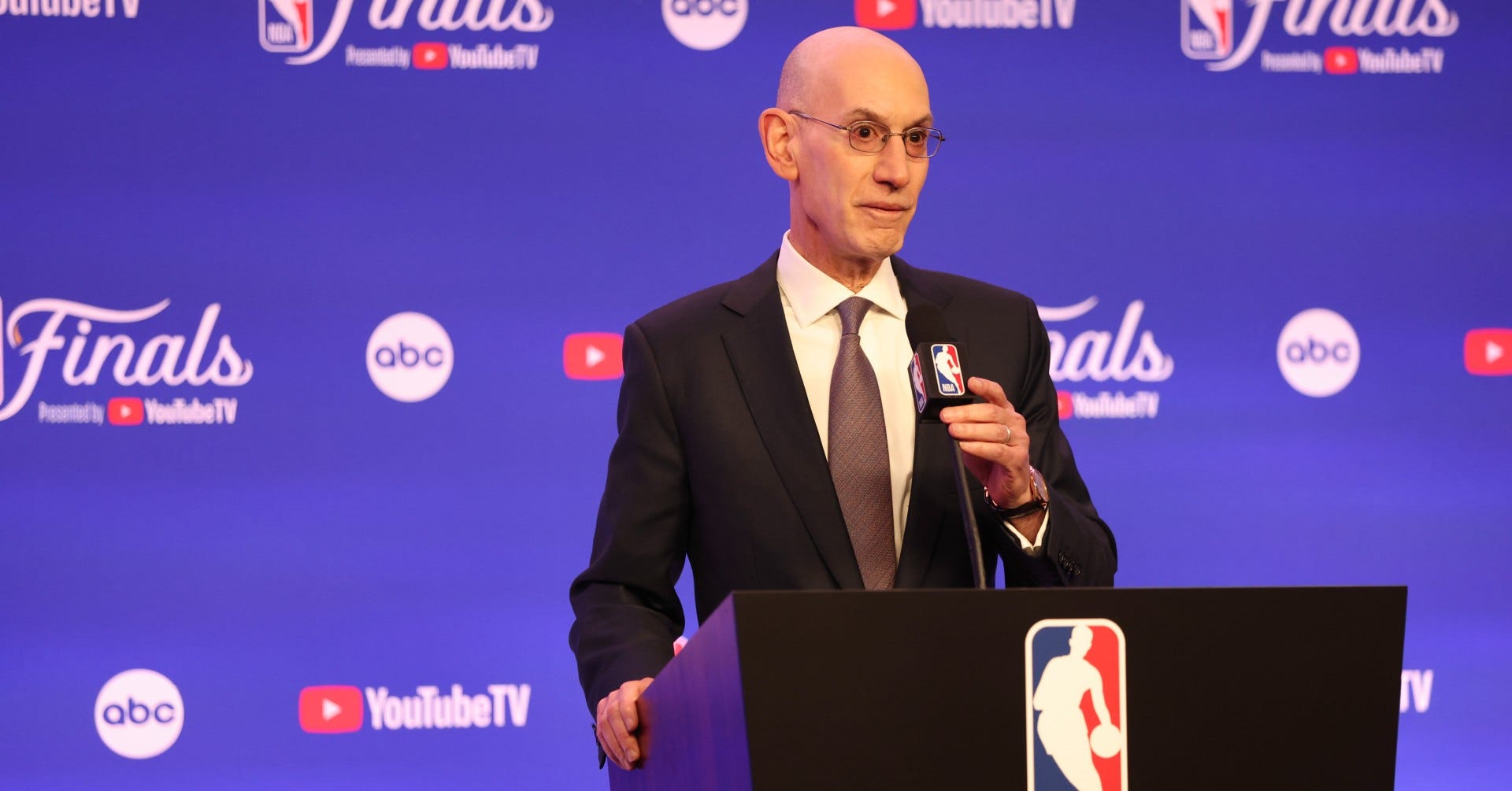
The tanking narrative has taken the NBA by storm. How dare these teams intentionally lose games in an effort to get a higher draft pick! And some of this outrage is valid: I’m not a fan of what some teams like the Jazz are doing, sitting their best players in the fourth quarter when a game is close. That’s unethical tanking — taking a team good enough to win and intentionally holding it back. We may need to bring back Sam Hinkie to show them how good, old-fashioned, respectable tanking is really done. Those Sixers teams were genuinely horrendous, no matter how hard they tried.
However it’s done, tanking is an inevitable part of the NBA. And the reason why is fairly simple.
This is a league where getting a generational player on your team is the key to winning at the highest level. And unless you’re the Lakers — who apparently wake up every morning to a trade offer sending them Luka Doncic for a bag of potato chips — the best way to get these players is the draft. And the best way to maximize the odds of drafting a star capable of carrying your team is by picking early. Pair that with the fact that the current CBA effectively allows teams to control a drafted player for the first 10 years of their career, and it’s easy to see the value of an early selection. These are all generalizations, and there are exceptions to the rule, of course, but on the whole, the draft is the best option in the current NBA landscape for building a team from the ground up.
Take that clear value of early draft picks and combine it with the fact that a worse record gives you a better chance at a higher draft pick, and voilà, the magic of tanking is revealed. And to be clear, this is how it should work! You want to have a balanced league where teams that are bad have a chance to cycle back around and be competitive again. The Pistons and Spurs are good examples of horrible teams flipping around after hitting on a star to lead the team, in Cade Cunningham and Victor Wembanyama, respectively.

So what’s the problem here? Why are the NBA and the media that cover the league so upset?
It’s that there are too many teams doing it (and potentially that it’s messing with their gambling partnerships, but that’s naturally not an endorsed reason from the league). You can make a real argument that nine teams are actively trying to lose games in the NBA. They’re easy to find — just look at the bottom of the standings. Add in the Pelicans, who have no incentive to lose, but are just bad (except on Fly the Process games), and a full third of the league is effectively a bye game for the other two-thirds of the league. That makes for a bad product.
So the NBA has come out with some grandstanding, mentioning how they are going to make “substantial changes” after this year to solve the problem. The NBA has never tried to fix this before, so at least finally they… oh wait no, they have tried. About five different times, in fact. And wouldn’t you know it, those changes — most notably the flattened lottery odds — are the exact reason we’re in this predicament in the first place (more on that in a minute).
Unfortunately, the NBA has not learned from this fact and has come up with several potential solutions to fix this tanking problem once and for all. To be fair, most of these ideas come from a reasonable place. The league wants to discourage teams from intentionally losing games. The problem is that many of these proposals underestimate how quickly teams adapt to whatever incentive structure the rules create. I’ve always loved game theory, so let’s put on our economist hats and walk through why each is likely to do nothing at best or backfire horribly at worst.

Flatten odds for all lottery teams: Let’s start with the worst of them all. The whole reason we’re in this tanking fiasco in the first place is that the NBA already flattened the odds once, which gave teams farther down the standings the hope of jumping into the top four and landing a generational talent. And the thing is, they’re right to believe it (see Dallas and San Antonio last year). By spreading those odds across more teams, the league didn’t eliminate tanking; it just made tanking appealing to a larger portion of the standings. If anything, the odds should tilt more heavily toward the worst teams so they can actually find their way out of purgatory. Flatten them further, and you won’t reduce tanking — you’ll just encourage more teams to join in and potentially even lose their way out of a playoff/play-in position like the 2022-23 Mavericks.
First-round draft picks can be protected only for top-four or top-14-plus selections: One of their better ideas. I can see where they’re coming from: Removing protections entirely means we won’t have scenarios like the Jazz trying to keep a top-8 protected pick away from the Thunder this year (though the Jazz would probably be tanking regardless, to be frank). But limiting protections to top-4 or top-14 just creates a new arbitrary cutoff for teams to tank toward.
Lottery odds freeze at the trade deadline or a later date: Sure, teams won’t intentionally tank after the decided date, but the incentives for bad teams getting high picks don’t change, so this just means teams will tank earlier in the year.
No longer allowing a team to pick in the top four in consecutive years and/or after consecutive bottom-three finishes: *Taps the sign* The whole point of the draft is to get bad teams back to relevance! Stop trying to make it harder! Even if we remove that factor, this incentivizes other teams farther down the order to tank harder because they are competing against a smaller pool of teams.
Lottery odds allocated based on two-year records: The only thing better than teams tanking for one year… is teams tanking for multiple years.
Lottery extended to include all play-in teams: My finger is starting to hurt from all this sign-tapping. Why would a team that’s actively in the playoffs need a star player more than the worst team in the league?
Teams can’t pick in the top four the year after making the conference finals: Genuinely just why??? Any team that was just in the conference finals is not being intentionally bad; they just got hit with horrible luck (i.e., this year’s Pacers with Haliburton’s torn achilles).

Moral of the story? You can’t make changes that remove the team record from the draft slot equation, or you lose out on the entire purpose of the draft itself: to improve bad teams. This year features an elite draft class, so naturally, there’s going to be tanking. More than likely, the NBA will make a change this offseason, teams will tank less because of a worse 2027 Draft, and the league representatives will scream from the rooftops that they fixed the problem until the next wave comes back around.
The NBA needs to stop trying to remove tanking from the game entirely and instead try to limit its volume. If there were just three or four tanking teams, it wouldn’t be getting even close to the volume of backlash there is currently. Stop expanding the lottery just to give more teams a shot at the players meant to turn bad teams into contenders.
There are various ideas that could be more impactful for changing the incentives or applications of those incentives. My personal favorite: remove the lottery entirely for the top two picks and actually give those to the two worst records and then make it so you can’t receive a top-two pick in back-to-back years. Some other ideas I personally like better than those currently proposed are un-flattening the lottery odds, shifting the lottery higher (i.e., only the top-10 picks), or rewarding teams/players for wins with monetary incentives. Regardless of the exact solution, you have to induce a change in the incentives causing the middling teams to tank, not those at the bottom.
Tanking isn’t some mysterious flaw in the NBA ecosystem. It’s the natural result of a league where the worst teams get the best chance at the best players. You can flatten the lottery odds, freeze them at the trade deadline, or invent a dozen other tweaks, but incentives will always win. As long as the draft is the fastest path to a superstar, some teams will decide losing today is the best way to win tomorrow.
 | A guest post by
|
You didn't cover my two favorite solutions!
1) The Women's hockey model. This is, once mathematically eliminated, each win is a point towards draft rank. This makes bad teams want to win after getting eliminated but could doom a bad team to be bad forever if they're THAT bad.
2) The "Your Team Sucks" draft. At the start of each season, each team (in reverse record order, so worst team first) picks a another team's draft pick for that year. You can't pick yourself. This completely eliminates the desire to lose and is my favorite solution.
"But limiting protections to top-4 or top-14 just creates a new arbitrary cutoff for teams to tank toward."
They aren't arbitrary, but I'm not sure that they work.
Top-4 protection is based on the idea that you can't plan to win the lottery. If you do, good for you, but you can't tank your way into it. You can tank to raise the odds, though, so it does create an incentive to lose. It might even incentivize the Sixers to tank out of the playoffs this year - just to have a very small chance at keeping their pick.
Top-14 protection is based on the idea that teams want to be in the playoffs more than they want a late lottery pick. I'm not sure that's accurate, either.
A more important modification would be to mandate that every first round pick that is successfully protected eventually converts into an unprotected first at some point (even if the protections kick in for multiple years). If a team has to give up a first eventually, there's less incentive to actively try to protect it for a year.