

2026 Sixers Draft Guide: The Guards
Beckett evaluates which guards are good enough prospects to warrant the 22nd pick, fit issues be damned.

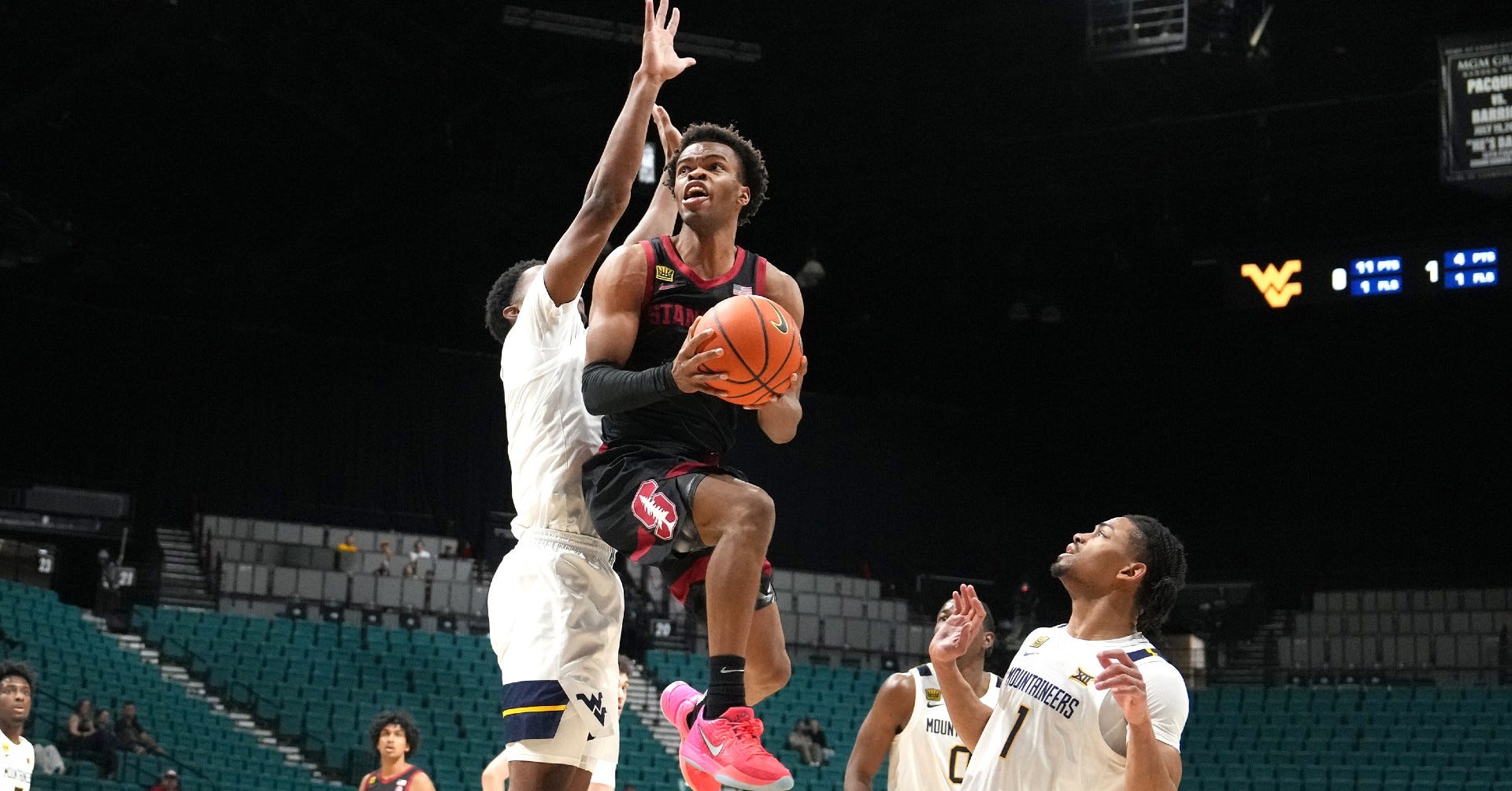
This is the third and final article breaking down my thoughts on every realistic option for the Sixers at pick No. 22, covering the final category of player: guards! You can find my thoughts on the options for wings here and the options for bigs here.
Guards won’t be a popular category of choice for this relatively backcourt-loaded team, but at 22 you’re looking for the best player available and the guard depth in this class is strong. For all the talk of “we have too many guards” as a reason for the Jared McCain deal, we quickly ran out of ball handlers in the playoffs when under the bright lights, leaving Tyrese Maxey and VJ Edgecombe to fend for themselves. The Sixers need to get an NBA player at No. 22 regardless of position, and if there’s a clear gap in player quality on the board in comparison to the bigs and wings available, you need to trust your board.
Once again, I’m not evaluating anyone in the consensus top 12, with how unlikely they are to make it within the Sixers’ range. That means Darryn Peterson, Darius Acuff, Keaton Wagler, Mikel Brown Jr., Brayden Burries, and Kingston Flemings are all not included in this piece. But this level of depth at the top of the board does make it more likely that some talented guards will fall on draft night into our range.
Read through the full player profiles on whoever interests you, or just skim the “Beckett’s Thoughts” sections to get a feel for where I have everyone and why. Let me know who you agree with or think I’m missing out on!
Dream Pick Category
I was incredibly tempted to have a couple of guards labeled as a dream pick (specifically my top two below), but as much as I love some of these players, team fit has to come into play somewhere. The only two long-term pieces I personally am building around at the moment are Maxey and Edgecombe, and as long as we’re dreaming, I’d rather get some of the prospects in the previous two pieces that project as a possible long-term starter next to those two.
Solid Selection Category
Labaron Philon: Guard - Alabama
Profile
Height/Wingspan, Weight: 6’2.5”/6’6”, 176 lbs
Age: 20.5
25-26 Stats: 22.0 PPG, 5.0 APG, 39.9% 3P%
Plays Like: Immanuel Quickley, Darius Garland
A dynamic combo guard who has showcased dominant productivity both on and off the ball throughout college — can he keep it up against NBA size?
Pros
Philon has elite lateral quickness and a terrific ability to get to his spots on the court. He pairs this with arguably the best ball handling in the draft and a tight and dynamic dribble that he uses in great tandem with his shiftiness.
His quickness and ability to create space pairs very well with his pull-up shooting off the dribble, where he is confident in creating his own shot. Even with a jump in volume, his scoring efficiency took a big leap, both at the rim (58.1% in 2025 → 65.7% in 2026) and from beyond the arc (31.5% in 2025 → 39.9% in 2026).
Philon is more scoring-oriented, but he is a very capable passer when he needs to be (2.0 assist-to-turnover ratio) running Alabama’s pro-style offense this past year. He had a massive uptick in pick-and-roll volume and consistently made the right play either calling his own number or setting up his teammates.
He has a few defensive questions as we’ll get to in the next section, but you can’t question Philon’s motor as a player. He is able to play bigger than his height — with a 6’6” wingspan — and knows where to be positionally thanks to his IQ.
He was simply extremely productive across the board this season, leading Alabama to a top-three offense in college basketball and both scoring and facilitating effectively across all levels of competition.
Cons
He’s just SO very small at 176 lbs and it terrifies me. The weight and subpar strength show up in his lack of rim pressure, relying more on his floater/runner package. That said, he’s not shy of contact and gets to the line at a high frequency (where he shoots ~80%) which helps counter some of his rim volume weaknesses. But he will need to show that same capability against NBA-level athleticism.
There are questions defensively for Philon. This past year as a sophomore he wasn’t effective for an NBA prospect, but there’s an interesting tradeoff where he was much better as a freshman when carrying a lower offensive load (he had an 89th percentile usage this past season). He’s small and will more than likely be bullied around a bit, but was seen as a defensive playmaker last season, so he has a chance to be disruptive on that end to overcome the size limitations.
Beckett’s Thoughts
I’ll lead off here by stating that I’m always a bit concerned about guards that are this small, and the Alabama system has spit out a few draft busts at the guard position in recent memory (shoutout to Kira Lewis Jr. and Joshua Primo). But I’m putting my instincts behind me and believing in what Philon has been able to do over the last two years. Outside of his weight, Philon has just about every possible positive indicator you can get in a guard with excellent shotmaking both on and off ball, strong playmaking, and some of the best ball handling in the draft.
He showed the ability to play in a secondary role next to Mark Sears in his freshman year, much the way he would fit next to Maxey or Edgecombe. But he also showed the clear ability to play in a lead-guard role this past season, and could immediately provide juice off the bench as a rookie for the Sixers. The combination of an elite balance of skills and capability to play both on and off the ball makes Philon my favorite fit of any guard option if he were to fall to number 22.

Ebuka Okorie: Guard - Stanford
Profile
Height/Wingspan, Weight: 6’1”/6’8”, 186 lbs
Age: 19.2
25-26 Stats: 23.2 PPG, 3.6 RPG, 3.6 APG
Plays Like: Jeremiah Fears, Dennis Schroder, Prospect Tyrese Maxey
An incredible driver who creates a high volume of scoring chances both for himself and his teammates, but may need development on defense and off the ball to find his place at the next level.
Pros
Okorie is a walking paint touch with his acceleration, explosiveness, and craft. Nearly half of his overall shot attempts came at the rim, and he also used those touches to get to the FT line consistently, where he shot 83.2% on 7.3 FTA per game.
A key driver of the elite rim pressure is his terrific handle, and I personally see him as the best ball handler in the draft (just a touch above Philon). The ability to dribble around players in isolation or split doubles and traps (which he saw a lot of) is otherworldly, and he just makes it look easy.
The shooting seems like it should translate with his FT indicators and aggressive volume at 9.7 three-point attempts per 100 possessions (3PA/100), most of which came off the dribble. He’s not the shooter that someone like Christian Anderson is, but he only needs to be capable with the dribble-drive capabilities he has.
He is a capable passer and can make the right reads when the defense bends to him. Not elite as a point guard (see below) but isn’t a black hole either. This is all he really needs to be a functional player given how much attention he pulls in with his rim pressure.
Okorie is extremely long with a 6’8” wingspan that lets him play bigger than his height. He is effective at using that length to deflect passes defensively and he had a strong block rate for a guard, giving some hope for future defensive development down the line.
He is the singular reason that Stanford had a strong offense this past season. It’s a miracle he was as effective and efficient as he was in Stanford’s environment, where he was doubled as much as any other player in college basketball last year.
Cons
Okorie is more of a scorer than a pure floor general right now. There’s not much manipulation of the defense and he is more just reading whatever clear option is available once his scoring angles get cut off. That said, he had the aforementioned tough environment at Stanford with subpar options to pass to, which makes the playmaking a bit more difficult to evaluate.
That same brutal Stanford environment makes it tougher to evaluate Okorie’s off-ball impact because he simply didn’t have a way to play off the ball — they drowned when he didn’t have the ball in his hands. He also wasn’t an effective off-ball player in high school which adds another level of concern.
While he generated an unbelievable amount of paint touches, Okorie’s rim finishing was highly questionable at just 51.9% in the halfcourt. The finishing package itself looks impressive with a variety of finishing looks, but they just don’t go down right now. While there’s an argument to be made that some of this comes down to volume and the lack of spacing, converting those looks will be key to hitting his theoretical ceiling.
He’s just small — and defensively there are some questions, even with his 6’8” wingspan. Okorie fits right into a typical Nick Nurse system, as he will gamble for steals, and this gets him out of position sometimes. He’s not a Trae Young by any means on this end, but it’s hard to picture him being a net positive on defense without a bit more development.
Beckett’s Thoughts
Okorie is very similar to Jeremiah Fears from last year, who went in the top 10 with his ability to get in the lane and blow by people off the dribble. The star outcome is there as a player that is an elite ball handler and driver, capable passer and effective shooter. His subpar defense may hold him back a bit, but he’s not as bad as other small guards could be on that end with his length and effort. Back to the concept about upside swings from the previous articles in this series, Okorie has the biggest upside in my opinion of the guards who could possibly be available to the Sixers, while still holding a solid floor of a microwave scorer who can run bench units.
While I have Okorie above Philon in my overall board, he’s just barely below Philon for the Sixers’ specifically due to questions around his playmaking and off-ball fit next to Maxey and VJ. That said, the upside case is so enticing that I’d be happy to watch him try to figure it out.
Bennett Stirtz: Guard - Iowa
Profile
Height/Wingspan, Weight: 6’2.5”/6’6”, 182 lbs
Age: 22.7
25-26 Stats: 19.8 PPG, 4.4 APG, 2.6 RPG
Plays Like: Cam Spencer, Collin Gillespie
Old-school point guard who is capable of running an offense with efficient scoring and controlled playmaking — can he handle yet another jump in competition?
Pros
Stirtz has excellent shooting touch both on and off the ball, making 37.2% from beyond the arc on 11.7 3PA/100, which even undersells his efficiency given the difficulty of his attempts. The windows he’s willing to shoot in are tiny, which should help it translate to the NBA level, and he’s comfortable both pulling up off the dribble and sprinting through off-ball screens.
That touch translates to the rim as well — when he gets there, he’s converting an absolutely ridiculous 70.5% of his attempts. That is unheard of for an unathletic 6’3” guard, but it’s not a fluke; he’s crafty.
Stirtz’s ball handling is not flashy but is effective. Compared to an Okorie or Philon, he’s not on the same tier, especially once he gets into the lane, but he can do enough to be on the ball consistently and doesn’t lose possessions to turnovers with his handle.
His playmaking is strong based almost entirely on his elite basketball IQ, as he’s not making the flashiest passes, but consistently makes the right reads to keep the offense flowing without making mistakes (2.4 assist-to-turnover ratio). Stirtz is extremely methodical in the pick and roll, which he used to operate Iowa’s offense at a high level.
Stirtz has been a clearcut number one option everywhere he’s been and he plays nearly every minute of the game with some of the best conditioning I’ve ever seen — a very fun fact is he averaged 40.3 minutes per game in conference play this year (for the less-consistent NCAA watchers, games are only 40 minutes). Stirtz was a winner at the DII level at Northwest Missouri St., then at Drake where he took them to a MWC championship, and then carried Iowa to the Elite Eight. It’s incredible how efficient he stayed even as he went up in competition levels from DII to Drake to Iowa.
Cons
Stop me if you’ve heard this before: Stirtz’s athleticism caps his ceiling, particularly defensively. His change-of-direction is a bit more limited compared to other players that we’ve looked at in this range. Once the athleticism jump hits to the NBA, will he be able to handle it?
While he typically at least tries on defense, he struggled anyway this year, which almost made it worse. There’s a chance he can exert more energy and physicality on this end when he’s not playing every single minute, but it will start off as a clear weakness. The screen navigation in particular was pretty brutal.
Though he was a terrific rim finisher, he didn’t get to the rim very often to capitalize on it. He is likely going to need to rely more heavily on screens at the NBA level as his isolation game is more perimeter-based.
Beckett’s Thoughts
Stirtz is an older prospect and the ceiling isn’t as high for the potential of star outcomes, but it’s hard to picture him not translating. Shooting, ball handling, playmaking, and shot creation is a package that is hard to turn down and Stirtz combined that with elite efficiency on an extremely high workload. The defense isn’t there, but once you get past players where the upside is more confident, he’s a great option as a proven winner who should be able to run a second unit at minimum, with upside for a bit more.

Christian Anderson: Guard - Texas Tech
Profile
Height/Wingspan, Weight: 6’1”/6’6”, 180 lbs
Age: 20.2
25-26 Stats: 18.5 PPG, 7.4 APG, 41.5% 3P%
Plays Like: Payton Pritchard
The player often referred to as the best shooter in the draft, who balances his shot with elite-PnR playmaking, but may struggle against NBA size and physicality.
Pros
He is a terrific shooter with extremely high volume and variety both off the catch and off the dribble. Anderson is likely the best shooter in the draft, which helps make up for his height issues, and he pulled from deep NBA range consistently. The pull-up shooting specifically is absolutely ridiculous, with 41.7% 3P% on five attempts per game. His shooting might be the single best individual skill of any guard outside the lottery.
Anderson is an elite pick-and-roll operator — 97th percentile in PnR frequency and 93rd percentile in PnR scoring — with his shooting opening up the passing lanes as the defense overreacts. Great passer with both hands, and is effective at reading the help defense to evaluate where the ball should go.
He’s a capable interior scorer even at his size. Not much of a rim scorer in general from a volume standpoint, though he converted well when he had chances. How well that translates to the league is a question, but he’s not averse to the basket.
Cons
Say it with me: He’s just small on defense! Anderson does compete and try to play with physicality, and his wingspan is big enough that he could maybe be impactful if he fills out more. But he needs clear physical development and it could get ugly when he’s targeted on a switch at the NBA level.
Anderson is not an iso player as he just wasn’t able to get by a defender on his own in college. Really needs pick and roll screens to run as a point guard versus shot creator. Those strengths fit the NBA but it caps his ceiling.
He is a great playmaker, but can also get a little more risky than you’d like, averaging 3.3 turnovers per game. This was particularly the case on drives and once his co-star JT Toppin went down with injury, as Toppin helped fuel a lot of his easier playmaking opportunities.
Beckett’s Thoughts
Anderson is extremely enticing, with a terrific combination of on- and off-ball impact offensively as a shooter and playmaker, two skills that NBA teams put a premium on. However, he makes for a difficult evaluation, as he’s not going to do much outside of that, and it’s hard to picture where he could find defensive success.
Anderson seems like he could run a second unit and add elite floor spacing, which is a decent outcome at this point in the draft. The main worry is his lack of physicality impacting his ability to operate inside the arc on offense, and his offense is critical, given the defensive concerns. That said, if you hated the McCain trade so much that you want to just get him back, Anderson is where you should be looking, as he’ll add that same shooting gravity and scoring punch off the bench.

Meh Category
Meleek Thomas: Guard - Arkansas
Profile
Height/Wingspan, Weight: 6’3”/6’7”, 190 lbs
Age: 19.8
25-26 Stats: 15.6 PPG, 3.8 APG, 41.6% 3P%
Plays Like: Brice Sensabaugh, Grayson Allen
Haphazard bucket-getter who will need further development in his playmaking and defense to fully harness his dangerous shooting talent.
Pros
Thomas’ biggest threat is elite perimeter shooting, at 41.6% from deep, and he is particularly deadly off the catch. The release is quick, with a smooth single motion that projects to translate – and he has good indicators, making 84.3% of his free throws and taking 9.6 3PA/100.
He brings that three-point shooting to the open floor where he is aggressive and efficient both from deep and at the rim. Along with Acuff, he had a strong impact on Arkansas’ top-ranked transition offense.
Didn’t make bad decisions with a 2.5 assist-to-turnover ratio. That didn’t mean he was a high-volume playmaker, as I’ll touch on more below, but he didn’t cost his team possessions either.
He’s capable of playing both on and off the ball. Thomas came into Arkansas as a scorer, but was very willing and able to play off the ball with Darius Acuff and DJ Wagner this past year.
Cons
Thomas has a lack of rim pressure for his profile that causes him to settle frequently for contested jumpers. A core driver of this is his subpar athletic explosiveness, but he also has the same issue as Edgecombe last year, where he picks up the ball a dribble too early on drives which can get him stuck.
Defensively, Thomas is not as impactful. He struggles against strength and physicality, which is likely to be an issue given he will be more of a shooting guard than a point guard. He’s not a nothing on this end, leading the Razorbacks in steals (1.5 SPG), but he can get extremely inattentive off-ball.
His playmaking is not there compared to these other guard prospects (8th percentile in assist rate), and like defense for big prospects, I prioritize playmaking more when evaluating guards. Thomas is a decent connective passer, which helps, but I wouldn’t love him running my offense as the primary or even secondary playmaker. It’s not helpful that he’s point-guard sized, but will need to play more as an off-ball guard.
Thomas just plays out of control right now, rarely appearing on balance with or without the ball. For the NFL fans out there, he plays a bit like Isaiah Pacheco runs, which doesn’t translate quite as well to the basketball court.
Beckett’s Thoughts
As the secondary prize to Darius Acuff in Arkansas’ backcourt, Meleek Thomas projects similarly to Isaiah Evans as an elite shooter who may struggle to exert himself elsewhere. Thomas’ size is actually the best of any of the guards in this range, which would in theory project a fit better next to Maxey and VJ. However, the overall package and upside he provides isn’t quite as high, which drops him down my board. Thomas would be a decent target in a trade-down scenario, but No. 22 is a good bit too early for me — there will more than likely be better players on the board.

Other Names:
Sergio de Larrea
De Larrea has a first round grade for me as a good-sized guard (6’6”) who processes at a high level and adds strong three-point shooting (38.6% 3P%). His handle is a little bit loose and he lacks physical strength at only 175 lbs, which caps his ceiling as a primary point guard. However, he is terrific playing as a second-side creator, both with his shooting and attacking closeouts, and he is effective enough on defense with good effort and positioning. De Larrea feels like a player that will have a role at the next level, and would be a great target on a trade-down or with an early second-rounder. I’d honestly prefer him to Meleek Thomas if it comes down to it.
Ryan Conwell
Conwell is an elite shooter with the highest three-point volume of any player we’ve discussed in this series (17.5 3PA/100). He’s not a traditionally effective athlete, but he’s strong and I’m a fan of his deceleration and movement skills as a player that can translate. Even with his age and subpar height (6’2”, 6’7” wingspan) for his wing-style game, Conwell has a first-round ranking for me overall, and would be someone I run to get if he slips to the second round with his ability to help the Sixers from beyond the arc.
Richie Saunders
Saunders fits exactly what you’d look for in a competent NBA player with size (6’5”, 6’9” wingspan), shooting (41%+ on C&S threes over the last two seasons with high volume), feel, rebounding and defense. Why is he down here, then, you ask? He’s ancient by draft standards, at nearly 25 on draft night, has below-average athleticism measures, and is coming off of an ACL tear late in the season for BYU that will likely keep him out for much of next season. That said, once we get into the second round, I’m willing to take the swing on a player who appears ready-made to fit into an NBA rotation when healthy.
 | A guest post by
|
I don’t want to nitpick this too hard because we’ve picked him and you like him as a prospect.
But saying Philon struggles with rim pressure is ludicrous to me. His highest proportion of shots last year came from 1-3 feet. That’s a layup.
He was 84th percentile amongst guards in rim attempts per 100.
He also is good at floater range, which is awesome. But he took wayyyy more shots from layup range than middle-floater range.