

2026 Sixers Draft Guide: The Bigs
Beckett attempts to solve the Sixers’ backup big problem once and for all with pick No. 22 in the draft.

This is the second of three articles breaking down my thoughts on every realistic option for the Sixers at pick No. 22 — check out my last article on the wings here and keep an eye out for the guard prospects (I know, I know…) coming soon.
As I mentioned in the wings evaluations, my primary goal is to look for the best player available, with a lean toward wings and bigs. Tyrese Maxey and VJ Edgecombe are my biggest concerns fit-wise, and I want whoever we take to work next to those two long-term, but if a player has a meaningfully higher ceiling than the next guy on my board, that wins out. Pick No. 22 is late enough that landing someone who plays well enough to earn a second contract is a good outcome.
I’m not evaluating anyone in the consensus top 12, given how unlikely they are to fall this far without a dramatic slide. That means Cameron Boozer, Yaxel Lendeborg, and Aday Mara are all not included in this piece. If by some miracle Lendeborg or Mara falls, run the card up to the podium and dance the night away, but the main focus should be on the players listed below (and even some of them are unlikely to last to our pick).
Read through the full player profiles on whoever interests you, or just skim the “Beckett’s Thoughts” sections to get a feel for where I have everyone and why. Let me know who you agree with or think I’m missing out on!
Dream Pick Category
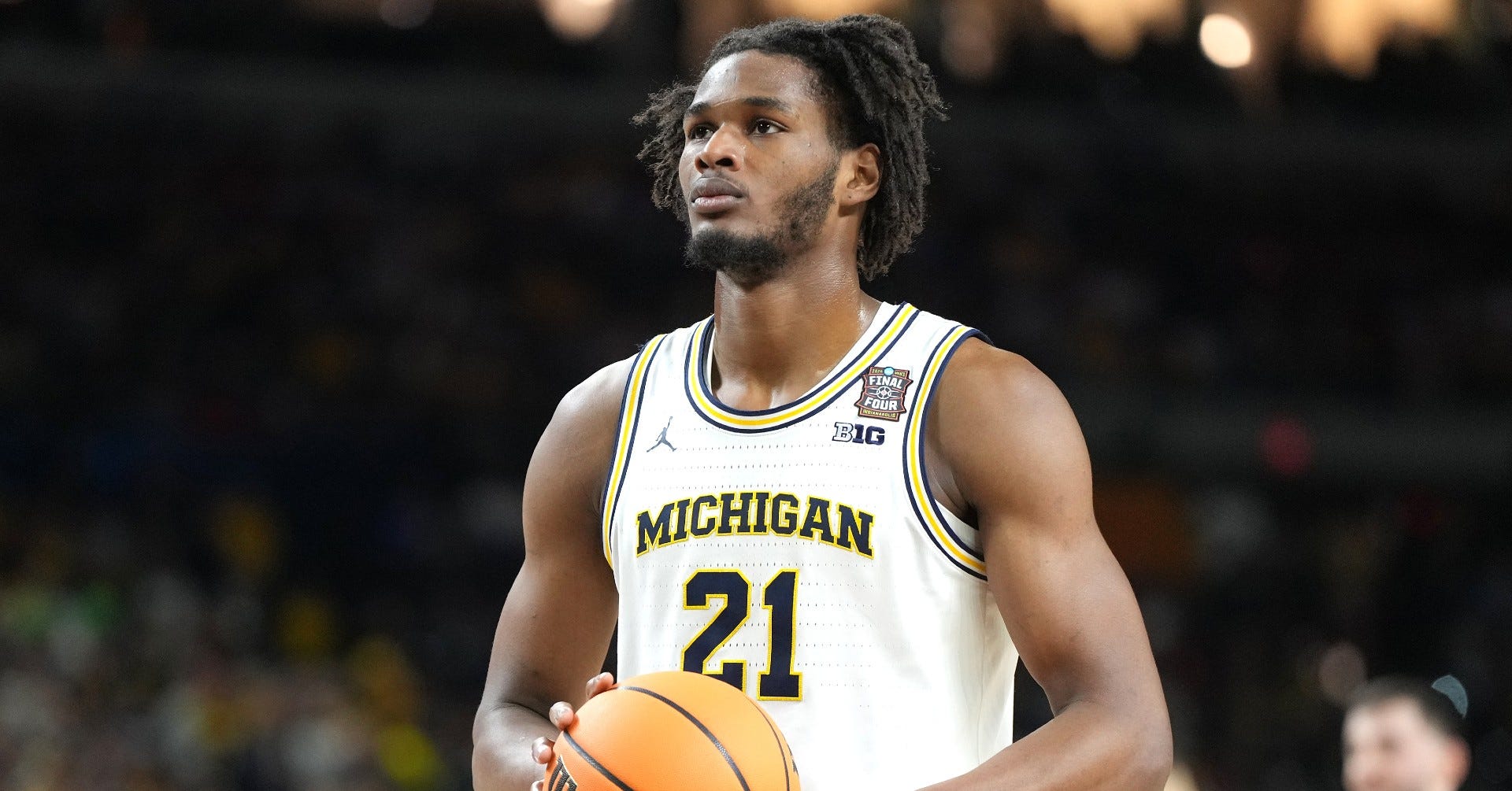
Morez Johnson: Big - Michigan
Profile
Height/Wingspan, Weight: 6’9”/7’3.5”, 251 lbs
Age: 20.4
25-26 Stats: 13.1 PPG, 7.3 RPG, 1.1 BPG
Plays Like: Isaiah Stewart, Al Horford
A dominant athletic force whose motor runs at 100% at all times while adding additional skill flashes not often found in athletes of his level.
Pros
Johnson is a defensive monster who will make an impact at either the 4 or 5 spot. He’s one of the players who is a tweener in a good way, with the ability to use his agility to defend forwards and his length/strength to guard bigs. Johnson was a core reason that Michigan was able to play their dominant three-big lineup with him, Mara, and Lendeborg, as he could both support Mara as a secondary rim protector and disruptive force at the 4 while taking over as the primary rim protector at the 5 when Mara was off the floor. His 7’4” wingspan lets him play far bigger than his listed 6’9” height.
He was a terrific rebounder on both sides of the ball this past year at Michigan, but was even stronger as an offensive rebounder in his one year at Illinois before he was surrounded by other bigs at Michigan. He’ll make an immediate impact on the glass.
Morez has an unbelievable motor and seems to find himself in the middle of every play. He would be a breath of fresh air amidst some of the other slow-moving players we have had on the Sixers over the last couple of years and would be able to threaten in transition as a rim runner next to Maxey and VJ.
He’s a strong finisher, going hard to the basket and making 73% of his rim attempts on the season. This aggressiveness and physicality also earn him a ton of trips to the FT line, where he is an excellent FT shooter for a big man at 81%. This is his main scoring threat on offense at the moment.
Cons
Johnson is not a shooter right now; let me just get that out of the way first as the most relevant point and as the reason that all these positive thoughts you’re about to read are in the “Cons” section. That being said, there are many positive indicators, particularly from his FT shooting efficiency and increasingly clean form. He took a massive jump in FT touch and willingness to attempt threes from his freshman year at Illinois to this past season, and I’m buying that the shot will develop into a capable threat at some point down the line.
Johnson is not much of a playmaker currently, though he has shown some positive flashes. He is prone to just some silly throw-away passes, and while his physicality is awesome 99% of the time, it can lead to some turnovers on the occasion when he crosses the line.
Beckett’s Thoughts
Johnson is unlikely to make it to the Sixers as he seems to have been moving up draft boards quickly and into the lottery, but he is one of my favorite options if he is available. He doesn’t have the same superstar upside as some other players, but this is a player that every single team would benefit from having on its roster. He has an incredible combination of strength and agility, but pairs it with ancillary skills that you don’t often see in the physical forward archetype. I have him this high in part due to a bet in the shot developing, and the ceiling outcome would require that development, but he’s going to have a role in the NBA regardless of whether he can space the floor. Johnson would be a fan favorite the second he stepped on the floor.

Jayden Quaintance: Big - Kentucky
Profile
Height/Wingspan, Weight: 6’9”/7’5”, 253 lbs
Age: 18.9
24-25 Stats (at Arizona St): 9.4 PPG, 7.9 RPG, 2.6 BPG
Plays Like: Robert Williams III
A DPOY-level defensive prospect who dunks everything on offense and shows flashes of more — it all comes down to whether he’s healthy.
Pros
Quaintance is an ELITE defender with a clear argument for being the best defender in the draft when he’s operating at peak level. His production on that end at Arizona St as a 17-year-old was unbelievable and had him in line to be a top-10 pick if he were eligible. He’s the most likely guy from this draft to win a DPOY at some point in his career.
His rim protection has a strong case to be considered the best in the draft, and his excellent hand-eye coordination is a key driver of this when paired with his timing and length. Quaintance’s gargantuan 7’5” wingspan lets him impact a ton of actions as a drop defender, but he is effective in any scheme. He also has a super quick jump speed and is just a bundle of energy around the court that seems ready to explode at a moment’s notice.
Not an elite switcher, but he can most definitely hold his own with his length and instincts. At Arizona St, he was very twitchy and moved his feet well to defend smaller players.
Quaintance’s interior scoring is effective with 69% finishing at the rim, and he is physically very strong, which lets him generate those looks consistently. Most of his scoring is from being a roller or putback threat, and that is likely to be his main role at the next level. His physicality also draws a ton of FT volume, though he has struggled at the stripe, as we’ll get to below.
Still extremely young even as a sophomore — he wasn’t allowed to declare last year because he had reclassified up a year in high school and he would have been a top 10 pick otherwise. The list of players who have been as impactful as he was at a young age is small, and he still has a ton of room for growth (or more importantly, to bounce back from his injury).
He is an excellent rebounder on both ends of the ball and is capable of anchoring a lineup on the glass.
Cons
Quaintance has big injury concerns, so it all comes down to the medicals. He’s coming off an ACL injury in February of 2025 and seemed to return to play too quickly at Kentucky, as he only played in four games before shutting it down with knee soreness. Last year was a complete wash for him with Kentucky, as he played just one healthy game (though it was against St. John’s where he dominated Zubi Ejiofor, who we’ll get to later) before eventually shutting it down for the year. It’s difficult to tell from the outside what his medicals look like, and that’s going to be the key determinant in his overall outcome.
Offensively he’s more of a wild card outside of his rim finishing. Quaintance can struggle with playmaking and has a few too many turnovers (negative assist-to-turnover ratio). That said, his main evaluation is from Arizona St, where he was essentially running the offense, and the context of that team was horrendous. There are some flashes of other skills from that year, particularly with his ball handling to break less athletic bigs down off the dribble, but he’s not yet consistent enough there to count it as a strength.
Not a shooter in the slightest. Can settle for some further touch shots where he’s less efficient on the interior rather than getting to the rim all the way at times. This hurts him the most though as a FT shooter, where he was under 50% from the line as both a freshman and a sophomore. That is the more important development than actual floor spacing given the FT volume he can generate with his physicality.
Beckett’s Thoughts
If you’re out on Quaintance, I completely understand. We’re looking to build around just Maxey and VJ right now solely because we drafted a big with injury concerns and are suffering the consequences. However, the only reason Quaintance is even possibly available at 22 is the injury concern, as he would have been a lottery pick last year as a 17-year-old and didn’t regress talent-wise. Players this young and talented are so difficult to acquire outside the top 10, and truly elite big-man defense is incredibly difficult to find, which makes it very hard for me to pass on him.
The injury concerns scare me (it is so hard to picture a Sixers’ success story when dealing with another injured player), but I can see us looking back in five years and saying, “That one injury was an outlier, and he should’ve easily been in the top 10 based on his age and production.” Continuing my thread from the last article, I’m aiming for the high-upside swings in this draft, targeting a long-term bet to put between Maxey and VJ, and there aren’t many, if any, better than Quaintance at this point in the draft.
Solid Selection Category
Allen Graves: Wing/Big - Santa Clara
Profile
Height/Wingspan, Weight: 6’8”/7’0”, 226 lbs
Age: 19.9
25-26 Stats: 11.8 PPG, 6.5 RPG, 41.3% 3P%
Plays Like: Robert Covington, offensively-oriented Collin Murray-Boyles
A bench player in a mid-major conference who has found himself in first-round talks thanks to dribble(ish)/pass/shoot capabilities and elite defensive playmaking.
Pros
Graves is not a high-volume passer, but he makes the right read at all times and rarely turns the ball over. He has a terrific 2.5 assist-to-turnover rate, emphasizing his priority on turnover avoidance. He’s a particularly strong passer to cutters in the lane, which synergizes well with his offensive rebounding.
He’s extremely disruptive defensively, with one of the highest combinations of blocks and steals in the country. In fact, Matisse Thybulle and Chris Manon are the only two other players to ever have both a block and a steal rate higher than 5%. Driven by his incredible hand-eye coordination and quick reaction speed, he is a monster off the ball.
Graves is an excellent rebounder, ranking in the top 95th percentile in all of D1 on both sides of the ball. He generated high putback volume with that rebounding and was effective in scoring on his second chances.
The perimeter shooting was very effective this year at 40.7% from beyond the arc, and he was more than willing to get them up. He’s confident taking shots, particularly off the catch (he loved pick-and-pop sets especially), and should be able to space the floor right away. However, I do want to caveat the 40%+ three-point efficiency with the fact that his volume (6.7 3P/100) and FT efficiency (75%) were just average, and he had a pretty slow release that needed to be assisted — he took only two off-the-dribble jumpers all year and missed both. He’s not an elite shooter right now, but he is capable and will be effective at spacing the floor off the ball.
Cons
It’s a little weird to be talking about a player in the first round who came off the bench for most of the year in a mid-major conference. The competition in the WCC wasn’t great, though he did play well in their nine games against top-50 teams, and they do have a pro-esque system at Santa Clara with Herb Sendek — Jalen Williams and Brandin Podziemski are recent graduates in the NBA. However, Graves’ interior presence was more of a question against those stronger opponents, seeing a particular drop-off with his rim protection and rim finishing numbers.
Though he made a ton of impact defensively off-ball with his blocks and steals, he isn’t a lockdown on-ball defender by any means, often struggling to keep ball handlers in front of him. He’s also extremely foul-prone and can get jumpy a lot of the time.
The lack of speed is a bit tough to deal with given he’s probably more of a forward at the next level. The tweener label applies here, which can sometimes be good or bad. In this case, it’s bad as he’s a bit too slow for wings and too small for bigs. Will likely struggle to play small-ball five (which he played often in college) just because he can get bullied around by most centers, which ties back to the point about him struggling inside against some tougher competition.
Beckett’s Thoughts
Graves is a highly divisive draft prospect, as he is an analytics darling with metrics that put him closer to the top five in the draft as opposed to the Sixers’ range (tied for 4th nationally in the well-reputed BPM metric). Now obviously, that’s not the consensus on him, or he wouldn’t even be in this article, but it does represent the level of impact he was able to exert on the game throughout his time at Santa Clara, even off the bench. He’s a prospect with excellent feel on both ends and always seems to find himself in the right place to make a play happen.
His ceiling is a bit more capped compared to some other prospects, due to his just-decent scoring and his physical limitations (in all honesty, he probably should’ve been in the wings article, as that will fit his role more at the next level). However, he would be able to play for the Sixers right away and add a level of rebounding and feel that they desperately need.

Tarris Reed: Big - UConn
Profile
Height/Wingspan, Weight: 6’10”/7’4”, 264 lbs
Age: 22.8
25-26 Stats: 14.7 PPG, 9.0 RPG, 2.0 BPG
Plays Like: Not-old Andre Drummond
A dancing bear who combines physicality and a massive frame with impressive agility and feel.
Pros
Reed has been one of the best rebounders in the sport on both sides of the ball, not only this past year but for all four years that he’s been in college. He has very soft hands and will make an immediate impact on the glass on both sides of the ball.
The playmaking and feel are terrific for a big. His short-roll decision-making was excellent and played a big role in UConn’s ability to run its complex sets this year (which often run through the bigs). That comes with the caveat that some of the playmaking could be coming from his role in UConn’s offense, which creates a ton of clean passes, but his processing and ability to execute in that scheme were impressive.
He is way more nimble than you would think for a guy his size, and he combines the quickness with great footwork that he used to cook several NBA prospects throughout the year. A combination of quickness/mobility and strength is very enticing and gives him an immediate role at the next level.
Reed is effective as a rim protector with a strong block rate for his whole career, and he leverages his big 7’4” wingspan to be disruptive around the basket. He’s not quite as elite as some other players in this class, like Quaintance or Mara, but he is more than capable.
Capable finisher — 69% at the rim on very high volume — and has great hands to corral any kind of pass on the interior to set up those attempts (no Adem Bona bricks-for-hands issues here). He is a great pick-and-roll threat, both because of that finishing and because of his excellent screen-setting, which uses his wide base to create a ton of space for the ball handler.
Cons
Reed is not a shooter in the slightest, struggling both from the floor, where he barely attempted jumpers, and from the FT line, where he has hovered just above 60% over the last two years. He’s not going to be a floor-spacing threat at any point, and you’re just hoping for FT development if anything.
Reed is an older prospect — what you see is what you get — and he only really started popping this past year at UConn in a program that often helps facilitate success. He wasn’t unsuccessful by any means in his first three years in college, but you’re seeing him at the end of his development in comparison to some other players in this range who are towards the start of theirs.
Beckett’s Thoughts
Reed would have had GMs salivating about 10 years ago — he’s the big man’s big man, controlling the paint and dominating with an impressive combination of strength and finesse. He has a clear case to be our backup center right away and would pretty much just be like turning back the clock on Andre Drummond. Is he going to be a starter at any point? Probably not. But he seems like he has a great case for a long NBA career given his strengths and feels exactly like the player that can be a spot starter if your main guy is out (for whatever reason that may occur; I certainly couldn’t picture that happening to the Sixers). Reed would be a pretty good selection at No. 22, but given his typical projected range is more towards the end of the first round, I would absolutely love him as a target to trade back and add some assets in the process.

Meh Category
Hannes Steinbach: Big - Washington
Profile
Height/Wingspan, Weight: 6’10”/7’2”, 248 lbs
Age: 20.1
25-26 Stats: 18.5 PPG, 11.8 RPG, 34.0% 3P%
Plays Like: Isaiah Hartenstein with less passing, Mo Wagner
A terrific rebounder who shows flashes of additional ancillary skills, but lacks the defensive chops to be a two-way force at the NBA level.
Pros
Steinbach’s greatest strength by far is that he’s a terrific rebounder on both ends, with a concrete argument for the best in the draft. This complete dominance on the glass is a strong sell given the way that NBA teams have been focused on rebounding and the possession battle, especially this year.
He is a good rim finisher, making 70.6% of his looks at the basket. He’s not typically an above-the-rim finisher, but he is effective at what he does with soft touch around the basket.
Steinbach is a great screener, who creates a ton of space for his guards with a wide stable base. He was in a very tough situation in Washington, with poor spacing and a lack of strong guard play, which led to an inability to frequently leverage this skill. But he’ll be effective at the next level.
Maybe shooting? Steinbach was a willing and capable shooter both from beyond the arc (34.0%) and at the FT line (75.9%). But he didn’t take a high volume (40th percentile in three point rate) and had some wild misses, which are often a negative sign in the long-term shooting evaluation. It seems like most evaluations have this built into his profile, but I’m not necessarily relying on this to be a major threat at the next level.
Cons
He’s not a real threat as a rim protector, which is a difficult mold to be in for a starter unless you have some other special skills that let you overcome that weakness on the offensive end. His lack of vertical presence is a big issue here.
On paper Steinbach is a “5”, but the play style is much more like a “4” at the NBA level. However, he can be a bit lumbering for a “4” — he just doesn’t have the quickness to be a forward, especially defensively.
Playmaking doesn’t seem to be in the cards for him as currently constructed. He has shown flashes, but had a negative assist-to-turnover ratio and got in trouble against doubles (which he saw a lot of due to the lack of other threats on the Washington roster).
Beckett’s Thoughts
Steinbach profiles as more of a reserve big with a capped ceiling due to the lack of defense, which I personally put a heavy weight on when evaluating bigs. He will contribute somewhere as a backup (which isn’t a bad thing just to get some minutes) though I wouldn’t have him as high as I’ve seen him with a lottery pick in many mock drafts. I struggled with placing Steinbach between here and solid selection given his elite rebounding but the lack of rim protection is what ultimately cost him that spot. I wouldn’t be upset if he fell and the Sixers took him here, but I wouldn’t be strongly moved either.
Zuby Ejiofor: Big - St. John’s
Profile
Height/Wingspan, Weight: 6’7.5”/7’2”, 245 lbs
Age: 22.2
25-26 Stats: 16.3 PPG, 7.3 RPG, 3.5 APG
Plays Like: Xavier Tillman
A developed forward with impressive feel who lacks high-end athleticism, but plays with a motor that seems bound to earn him at least a rotation spot somewhere in the league.
Pros
Zuby has been a terrific offensive rebounder all four years in college and makes a massive impact on that end of the floor.
Outside of his rebounding, the playmaking and feel are the best selling points for Ejiofor. He was a genuinely strong playmaker this year, specifically as a DHO hub for St. John’s offense, while managing to keep his turnovers to a minimum. This was especially impressive given the poor context at St. John’s as they lacked any shooting/spacing threats throughout the year.
Ejiofor has a strong motor and is not afraid of physicality which helps him get to the line frequently. He’s a non-stop worker and is constantly moving around the court with 100% effort.
He is impactful defensively, though probably not a high-end primary rim protector at the NBA level. He would be at his best as a forward next to another strong rim protector who can support him.
While his play strength is a bit lower than you would expect, Ejiofor has excellent footwork and agility for a big on the offensive end.
Cons
Like several other bigs in this range, Ejiofor is an older prospect. There’s not as much room for development coming off his senior year and he’s already a bit below-average with his athleticism for an NBA big.
Ejiofor is a bit of a tweener and doesn’t have the natural size to play at the “5” like he did at St. John’s. You’d need to play him primarily at the “4”, but his lack of athleticism is likely to hurt his defensive impact there, specifically with lateral movement. The inability to protect the rim as a primary big is the main reason he’s a tier below Tarris Reed, even with similar metrics otherwise.
He has fine shooting touch coming off the best shooting year of his career, both at the FT line (71.8%) and from beyond the arc — though his 30.5% from three on 59 total attempts is not overly inspiring. However, given that he’s more than likely going to be a forward instead of a center at the NBA level, he’s not a strong threat to space the floor more than on the occasional catch and shoot.
You’d expect the defensive rebounding numbers to line up with his offensive impact, but he’s just decent on that end of the floor, holding back some of his theoretical overall impact. Some of that does come down to him boxing out for the other St. John’s guards throughout the year, not all of it though.
Beckett’s Thoughts
Ejiofor is a great target for a trade-down pick if they’re able to get a pick later in the first round or trade back into the draft early in the second. The toughness and IQ provide the exact kind of play we’ve been missing out on with the Sixers’ rotation guys, and he seems like the kind of player that we see Boston or New York grab before they make us miserable every time we play them. That being said, when I’m evaluating an older prospect, I don’t want the top selling point for that prospect to be physical dominance over younger competition. He’ll probably have a role as a late depth piece given his hustle and playmaking chops, but I’d rather target that in a trade-down scenario than at No. 22.
Henri Veesaar: Big - North Carolina
Profile
Height/Wingspan, Weight: 6’11”/7’2”, 227 lbs
Age: 22.2
25-26 Stats: 17.0 PPG, 8.7 RPG, 42.6% 3P%
Plays Like: Jay Huff
A skinny, floor-spacing big, whose lack of defense is the main factor holding him back from rising up draft boards.
Pros
Ahhh, a floor spacing stretch big at long last. Veesaar had a real bump in both volume and efficiency from deep this year, shooting 42.6% on 94 attempts, and he sports strong mechanics and a confidence that gives concrete belief in the shot. That said, there’s a small chance that this year was a flash in the pan as he was a late developer (~33% from three last season) and has struggled at the FT line this past year (61.5%... yikes). It’s likely that it translates, but the shot is an absolute necessity to his sales pitch as a stretch big which gives a little additional hesitancy to any bit of risk.
He is a capable rim runner and balances his shooting against his rolls to the basket off of screens to keep opponents guessing. He converted an excellent 75% on those rim chances that he did have.
Flashes of playmaking are there for sure, particularly hitting Caleb Wilson on cuts and lobs in the halfcourt. Good feel from a big is important in today’s NBA and Veesaar appears capable of holding his own with clean ball movement and the occasional true creation assist.
Cons
Veesaar wasn’t super productive until his age-22 season this past year at UNC. There’s also not as much upside here, given the clear off-ball role and lack of usage at UNC — even after Caleb Wilson went down with injury — so it’s harder to see him becoming more than a good backup at the NBA level. These late bloomers are a bit tougher to evaluate against younger players in the same range.
The play in the paint for Veesaar is a little more questionable at times than the overall numbers may make it look. He’s extremely light for a big at just 227 lbs, and when he was not able to exert his physicality he struggled, mostly aptly shown by his dip in efficiency in games against top-50 competition.
His defense took a step back this year from Arizona, and he plays like more of a small-ball big or even a wing on that end. If you can get a defensive big next to him, he’ll be awesome, but the vision that’s being sold here is more of a stretch 5, which is a position I don’t know that he can truly play at the next level.
Beckett’s Thoughts
Veesaar is a tempting prospect given the value that stretch bigs are providing in the NBA with the premium that’s given to spacing. He draws dream Lauri Markkanen comparisons, as someone who spaces the floor at the 4 spot and is a capable secondary rim protector on defense, and Veesaar will need to have a similar offensive impact level to earn his place in the NBA. However, his shooting history and indicators don’t concretely project the perimeter efficiency he would need to hit to reach that Markkanen-esque outcome. Add in the subpar defense for a big and it’s hard to see a long-term role as an impact starter. He’ll likely be able to play, but I’d rather take either a bigger swing or a more proven two-way piece in this slot.

We Traded McCain for This??? Category
Chris Cenac Jr.: Big/Wing - Houston
Profile
Height/Wingspan, Weight: 6’10”/7’5”, 240 lbs
Age: 19.3
25-26 Stats: 9.5 PPG, 7.9 RPG, 0.5 BPG
Plays Like: Onyeka Okongwu before he got good at anything
A toolsy big with elite measurements and strong rebounding who needs development in every other area of his game to find a role in the NBA.
Pros
Very athletic and extremely long with a gargantuan 7’5” wingspan. The tools are there for him to make an impact at the NBA level if he was able to add skill to it as well. He theoretically could project as a rim-protecting big with his size while also providing switchability given the solid mobility tools he has.
Rebounding, particularly on the defensive side of the ball, is the main selling point for Cenac right now as the core skill. He was elite at cleaning up possessions for a team in Houston that relies on it heavily, using his length and physical tools to crash the boards.
Every outside signal is that he is an incredible worker. Kelvin Sampson is a tough coach to choose to play for and he spoke to Cenac’s work ethic and willingness to be coached hard. If you’re going to take on a project like Cenac, you need to know they have the work ethic to maximize their potential at the next level.
Cons
He has lots of potential but not a lot of production. Cenac is athletic as mentioned above, but is a slow leaper which limits his actual applicable athleticism. It’s the reason he only had 0.5 blocks per game this year, even with the incredible athleticism measurements mentioned above.
Cenac has a HEAVY midrange diet while not being great at it, making just 43.3% of his non-rim twos. Shooting indicators in general also aren’t strong long-term, with just 62.1% efficiency at the FT line, in addition to subpar three-point numbers. The bigger issue though with his extremely heavy midrange diet is what it tells about his offensive approach which at the moment doesn’t leverage the physical gifts that he has, instead settling for inefficient contested jumpers.
Defensively the flashes are incredible but he isn’t consistent enough and needs a ton of work to get there. Part of that consistency also comes down to effort, as he can see noticeable dips in his assertiveness and focus throughout the game.
Cenac’s lack of feel shows up in his non-existent playmaking (negative assist-to-turnover ratio). He’s mostly looking to score when he gets the ball, but isn’t effective enough at it to be hunting his shot. He can also get a bit turnover-prone at times, which puts extra magnification on his lack of playmaking.
Beckett’s Thoughts
Cenac is just a player profile that is really hard to sell to me personally. So often we see players with high potential come in that are pitched as, “Oooh look at the physical tools he’s got, just wait for him to develop” and then they never develop to the skill level needed to actually be a productive NBA player. As just a rebounder with only theoretical potential for further offensive or defensive impact, he has no role on a legitimate team as currently constructed and will need a ton of G-League development to unlock his potential (which is likely that of a backup big). There’s an extremely narrow path that he could follow to get to an okay starter, but that’s a brutal target to be a first-round pick — I’m out on this one.
Other Names:
Most of these players are projected to be a little farther down the draft board towards the second round, but could be players to look at if the Sixers buy a pick or trade into the second round (if only Mike and I could be so lucky).
Trevon Brazile
Brazile has been a popular second-round sleeper as he is a vertically athletic and skilled big man (6’10” with a 7’4” wingspan) who you can get for cheap. The main reason he’s available is he’s a grandpa (24 years old — man is it depressing that this is grandpa age for basketball) and has an injury history with some recurring lower-body tweaks. That said, Brazile makes an impact defensively with some strong rim protection, adds capable floor spacing (35% on 328 attempts in his career), and may be one of the best lob threats in the country (which helps contribute to his elite 81% rim finishing efficiency). He is somewhat of a tweener, being a bit small for a 5 and a bit big for a 4, but the flashes are really enticing and worth a bet in the second round.
Ugonna Onyenso
Onyenso is an elite rim protector, and his profile lines up well with other strong traditional rim protectors out of the draft like Walker Kessler. Watch his ACC Tournament game against Duke, and you will immediately see the vision, as he dominates Cam Boozer in a way that not many people were able to do this season. He puts his 6’11” height and 7’5” wingspan to good use with a ton of lob dunks and offensive rebounding. However, outside of this and his defense, he does just about nothing else, which is why he’s a second-rounder and not highlighted earlier in the article. That said, Onyenso would step in and be a strong third big for the Sixers with the ability to develop into the backup big long term and seems like a player that’s just going to have a role in the NBA.
Izaiyah Nelson
Nelson is simply a dawg with a motor that consistently runs hot which lets him leverage his 6’8” height and 7’2” wingspan all over the court. He’s a menace defensively, blocking shots and getting in passing lanes with an impressive combination of horizontal and vertical athleticism. He also uses that physicality to generate a ton of interior pressure with extremely high rim and FT volume, both of which he converts at an above-average level. Nelson is on the older end of the class (22.7 years old) and is unlikely to ever develop any semblance of an outside shot, but as a second round swing, he would be enticing as an energy big off the bench to cause chaos.
 | A guest post by
|