

2026 Sixers Draft Guide: The Wings
Beckett breaks down every wing the Sixers should — or shouldn't — consider at 22.

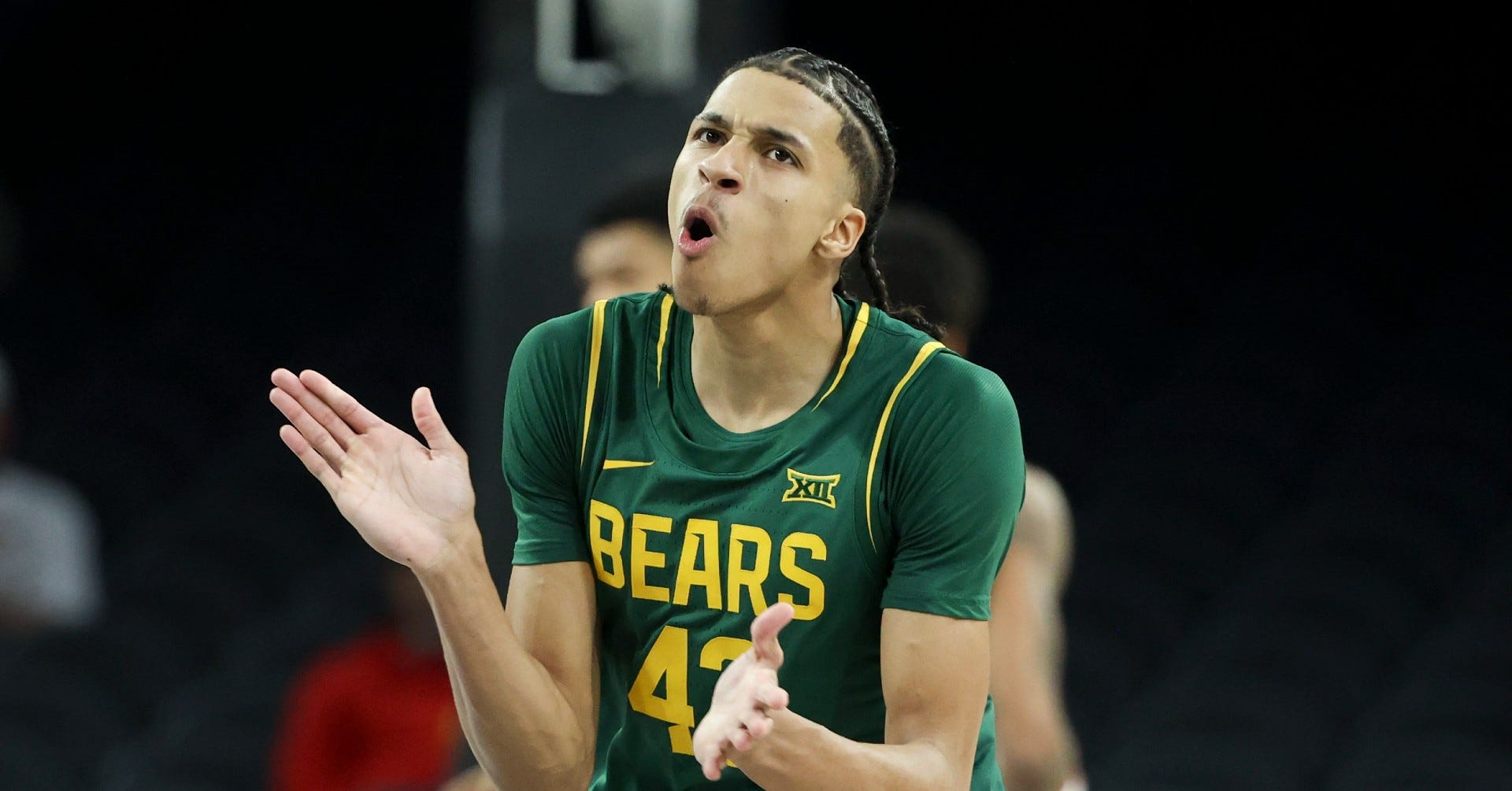
This is the first of three articles breaking down my thoughts on every realistic option for the Sixers at pick No. 22 — wings today, bigs and guards to follow. I’ve been doing draft scouting for a few years now and am excited about the opportunity to bring it to the Ricky; if you want to see how my takes on last year’s class aged, you can find that board here.
My primary goal is to look for the best player available, with a lean toward wings and bigs. Due to the age and injury-prone nature of Joel Embiid and Paul George, Tyrese Maxey and VJ Edgecombe are the only long-term cornerstones on this roster right now, and so everything else needs to be built around them. Fit matters — I want whoever we take to work next to those two long-term — but if a player has a meaningfully higher ceiling than the next guy on my board, that wins out. Pick No. 22 is late enough that landing someone who plays well enough to earn a second contract is a good outcome.
I’m not evaluating anyone in the consensus top 12, given how unlikely they are to fall this far without a dramatic slide. That means AJ Dybantsa (my personal top player in this class), Caleb Wilson and Nate Ament are all off the table here. It’s also worth noting that the departures of Thomas Haugh (returning to Florida) and Amari Allen (returning to Alabama) have meaningfully thinned the wing pool. Expect that to push some of the players below up real draft boards between now and draft night.
Read through the full player profiles on whoever interests you, or just skim the Reasoning sections to get a feel for where I have everyone and why. Let me know who you agree with or think I’m missing out on!

Dream Pick Category
Cameron Carr: Wing - Baylor
Profile
Height/Wingspan, Weight: 6’4.5”/7’1”, 184 lbs
Age: 21.5
25-26 Stats: 18.9 PPG, 37.4% 3P%, 1.3 BPG
Plays Like: Mikal Bridges, Trey Murphy
Do-it-all player who combines dangerous shooting volume and efficiency with terrifying athleticism — he just needs to get bigger.
Pros
Carr’s strongest skill is his three-point shooting, combining high volume (10.6 3P/100 possessions) with real efficiency at 37.3% on a variety of shot types. He’s elite off the ball — 40.7% on catch-and-shoot attempts — but has shown comfort creating off the dribble as well. The form is smooth and repeatable, the kind you project with confidence.
Leverages that shooting gravity well, attacking closeouts and getting to the rim and free-throw line as a result. His rim finishing sits in the 89th percentile across all of Division I, which is in part a testament to his length and athleticism.
Dangerous transition weapon with a large jump in rim volume in the open floor. Extremely explosive — he has a wide variety of highlights catching lobs and throwing down poster dunks when he gets a step.
Makes a bigger defensive impact than his listed height would suggest because of his 7’1” wingspan. Creates a ton of blocks for a non-big and is one of the better wing shot-blockers in the country. The length is real and shows up on both ends.
Capable playmaker within the flow of the offense. Not a primary creator, but makes the easy pass, moves the ball on second-side actions, and doesn’t put it in harm’s way.
Strong defensive rebounder who made a meaningful difference in Baylor’s overall rebounding numbers.
Cons
Play strength is the main concern. Carr can get bumped off his spots and struggles to play through traffic at times. He plays hard and tough, but against stronger defenders, he can turn into a below-the-rim finisher at times. Most players add bulk as they age, but at nearly 22, he’ll need to make that a genuine priority at the next level or it will limit him.
His lack of play strength has downstream effects on the defensive end as well. He impacts plays with his length and activity, but opponents who bring physicality to him can neutralize a lot of that. The defensive ceiling is tied to whether he can fill out.
Not an advanced ball handler, though he can get where he needs to go. Like VJ this past year, he’ll need to show some improvement here to unlock more creation at the next level.
Reasoning
Some evaluators will have Carr in the guard category, but I believe in both his ability to play the wing and his fit next to Tyrese Maxey and VJ Edgecombe. His shooting gravity, length and off-ball movement make him a hand-in-glove fit alongside both of them — a player who spaces the floor, attacks the glass, and adds defensive disruption without requiring the ball. The fact that he’s shown flashes of on-ball creation at all three levels gives him a higher long-term ceiling than he’s typically credited with. This is the kind of player who doesn’t leave the lottery in a normal draft given how wide his skill range is. I’m not sure he makes it to 22 — his current consensus range is in the teens — but if he does, or if he gets anywhere close, it’s an easy call.
Dailyn Swain: Wing - Texas
Profile
Height/Wingspan, Weight: 6’6.5”/6’10”, 211 lbs
Age: 20.9
25-26 Stats: 17.3 PPG, 7.5 RPG, 3.6 APG
Plays Like: Skinny Franz Wagner, Jalen Williams, Naji Marshall
An elite ball handler and slasher for his size with a very high ceiling as an on-ball wing creator, but needs development when playing off the ball.

Pros
Has a strong argument for being the best driver in this class at his size, which is what makes his ceiling so compelling. He shot 64.3% at the rim and 83% of those attempts were unassisted — he’s generating these looks himself, not just finishing off a teammate’s playmaking.
The driving ability is rooted in an unusually advanced handle for a 6’7” wing. He dribbles low to the ground, can break defenders down off the dribble, and posted terrific isolation numbers. Ball handling at this size is the rare skill that gives him legitimate star-ceiling upside.
Transition WEAPON. He generates extremely high rim volume in the open floor and converts it into free-throw volume as well, where he’s a strong 82% shooter. More controlled as a playmaker in transition than in previous years — he assisted on nearly 25% of Texas’ made baskets in the open floor while cutting down on his turnovers.
Strong passer for his size. His ability to get into the lane gives him natural leverage as a playmaker, and he’s shown flashes as the ball handler in pick-and-roll, which opens a more expansive role projection at the next level.
Excellent defensive rebounder, ranking in the top 5% of all Division I players. While he’s skinny, he isn’t a liability on the defensive glass, and his rebounding gives him opportunities to grab and go in transition.
Defensive playmaker, particularly in passing lanes. He was excellent in that capacity at Xavier in his freshman and sophomore seasons; Texas saw a step back from that, but the tools are there if he puts in the effort to prioritize it.
Cons
His shot is still a work in progress. Defenders at Texas were often comfortable helping off him beyond the arc and loading up to stop the drive, which both raises questions about his off-ball role and hurts his driving capabilities as defenders can sit back and give him space. The positive indicators are there — 82% FT% on high volume, 50% self-created midrange efficiency, and a decent 34.8% from three on just under three attempts per game — but the shot needs to develop for his off-ball value to fully materialize.
Good playmaker for his size, but he can get turnover-prone in the halfcourt. The turnovers show up more in set offense than transition, and he is a bit loose with his processing in traffic.
Swain’s mentality has been inconsistent. He didn’t impose himself as aggressively as you’d want given his profile this year at Texas — stretches of real assertiveness followed by long stretches of passivity. At his size with his tools, that aggressiveness needs to be a baseline, especially if you’re taking the swing with the hopes that he hits the ceiling outcome.
Defensive effort and impact were more inconsistent at Texas with the heavier offensive load. His lack of strength held him back on that end, and while the environment explanation is partially there, you’d prefer to see the Xavier-level disruptiveness carry over regardless of context.
Reasoning
Swain is a higher-risk bet than Carr given the necessity of his shot developing and the fact that his off-ball fit is harder to project — his role at the next level will be a meaningful variable in whether he hits his ceiling. But the Sixers’ situation is a genuinely good landing spot for him. Picturing Swain’s playmaking and driving capabilities operating alongside Maxey and VJ, who can feast off the ball is a dream worth chasing at this stage of the draft. Given the class strength, I want to swing for the star outcome here, and Swain offers the most realistic version of that among the wings realistically available at 22. Give me the 6’7” ball handler who can generate off the dribble and playmake off his driving penetration any day. Along with Carr and a to-be-named big man target I’ll get to in the next article, he’s at the top of my list.

Solid Selection Category
Joshua Jefferson: Wing/Big - Iowa State
Profile
Height/Wingspan, Weight: 6’8”/6’11”, 246 lbs
Age: 22.5
25-26 Stats: 16.4 PPG, 7.4 RPG, 4.8 APG
Plays Like: Actualized Trendon Watford
A savvy passer and triple-double threat at his size, though limited athleticism and age cap what he can become.
Pros
His main selling point is playmaking. Jefferson operated as the on-ball hub at Iowa State with some of the highest usage in the country and paid it off — 4.8 APG is exceptional for a power forward, and his feel and approach on those reads is the best part of his game. The idea of a playmaking big who can run the offense for stretches at the four is legitimately valuable.
Excellent defensive rebounder who turns that into offense immediately. His grab-and-go threat was a central part of Iowa State’s attack. He runs the floor well for his size and either hits outlet passes to teammates or waits for lanes to open up with his own momentum.
Good hands defensively, generating 0.8 blocks and 1.6 steals per game. His IQ is what gets him there as he finds his way into the right spots consistently. Capped athletically, but he made a strong impact within Iowa State’s aggressive doubling scheme.
Cons
Jefferson is an adequate scorer, but it’s not a core skill. He can work into the mid-post with his bulk and has a usable baby hook and push shot, but he doesn’t consistently create his own advantages and shot just 51% at the rim in the halfcourt. Without the threat of the shot, opponents can play the pass more consistently.
The playmaking quality that makes him interesting can also lead him astray. He gets a little aggressive at times and produces a few too many turnovers for a player who will need to run things efficiently in a reduced NBA role.
Shooting is a real limitation. He did shoot 34.5% on 110 three-point attempts this past season, which shows development, but it still isn’t a strength. It won’t be respected in high-leverage moments, and the fact that he only ever shot off the catch makes the spacing question more acute. The form isn’t broken and his confidence has grown, but he needs it to keep developing to hold down a functional NBA rotation spot.
Reasoning
His age and limited athleticism cap his ceiling — what you see is essentially what you’re getting here. Jefferson is a better fit for a team already in contention than for a young core trying to project three years out around Maxey and VJ. He likely holds down an NBA rotation spot, which, all things considered, is a pretty good outcome at pick 22, but there are players in this range I’d prefer given their room for growth. However, if he does end up in Philly, he’ll help the halfcourt execution immediately, and the playmaking at the four is genuinely useful. I wouldn’t be upset with the pick, assuming other players are off the board.
Isaiah Evans: Wing/Guard - Duke
Profile
Height/Wingspan, Weight: 6’5.5”/6’9”, 186 lbs
Age: 20.5
25-26 Stats: 15.0 PPG, 36.1% 3P%, 15.6 3P/100
Plays Like: Jordan Hawkins, Isaiah Joe
Extremely skinny off-ball shooter who will space the floor from day one, though his high-end outcome is somewhat capped.
Pros
Shooting, shooting, and more shooting! Evans has an argument for the best off-ball shooter in this draft, posting the second-highest three-point volume among projected top-40 picks behind Ryan Conwell. His feel for how to move without the ball to create clean looks is elite, with precise footwork setting up releases, excellent timing off screens, and quick release speed. All of it translates.
Loved functioning as the screener in inverted pick-and-roll actions with Cam Boozer at Duke and benefited greatly from the playmaking those actions generated. He knows how to manufacture good looks within a system without needing the ball in his hands.
Excellent off-ball cutter with the athleticism to finish better at the rim than you would expect, both in the open floor and in the halfcourt. More of a sneaky athlete than his frame suggests.
Cons
Extremely thin frame. He played bigger than his weight at Duke, but that doesn’t mean he played strong. He’ll likely be a mismatch target on the defensive end and can get bullied in situations where physicality is imposed on him. He’s very similar to Isaiah Joe in this way, where he’ll compete, but it often doesn’t matter to the outcome of the possession.
Limited playmaking and minimal counters when run off the three-point line. Around two-thirds of his shot attempts were threes — when he couldn’t get one up, he’d reset rather than create inside the arc. Not a shot creator in any meaningful sense.
More inconsistent off the dribble. That’s not what you’re counting on from him at the next level and ideally not the role he’s playing, but it does cap his ceiling as a secondary creator.
Reasoning
Most picks at 22 don’t become stars, and Evans isn’t a star bet. But if you’re looking for a concrete contributor who will at minimum eat useful minutes in the regular season, he fits that bill confidently. You could argue he’s more of a guard than a wing, but the off-ball movement and shooting will create real gravity at the next level regardless of what you call him. He’s always on the move, always contributing to offensive flow, and has won at every level he’s played. Once the higher-upside bets are off the board, Evans is a welcome addition.

Meh Category
Koa Peat: Wing/Big - Arizona
Profile
Height/Wingspan, Weight: 6’7”/6’11”, 245 lbs
Age: 19.4
25-26 Stats: 14.1 PPG, 5.6 RPG, 2.6 APG
Plays Like: Rui Hachimura without the shot, Jarace Walker
A physical forward who plays hard and has good feel, but doesn’t add enough on either end of the floor right now.
Pros
Physicality and play strength combined with real quickness is a compelling combination, especially for someone as young as Peat is. He physically dominated a lot of opponents throughout the year, which shows up in his 67% rim finishing efficiency.
Generated a ton of free-throw volume thanks to his physicality — top 10th percentile in Division I in FT volume. The 62% efficiency at the line is ugly, but the contact drawing ability is real.
Cutting is arguably his best offensive skill. It was especially useful in Arizona’s scheme, which operated with one of the lowest three-point rates in the country and heavily crowded the paint. Peat’s feel for timing his cuts within that environment is a good sign for his basketball IQ.
That feel shows up in his playmaking too. Peat is not typically making advanced reads, but he was particularly adept at Arizona’s high-low actions and finding the open man on short-roll 4-on-3s. Makes the correct simple read in most cases.
Effective offensive rebounder and putback threat. Some of that is scheme-driven — Arizona was one of the most prolific offensive rebounding teams in the country — but the instinct is real.
Defensive potential is there even if it isn’t fully actualized yet. The strength and quickness are good tools for on-ball defense at his position, and he’s a winner who competed hard throughout the year.
Cons
Peat is a complete non-shooter. He attempted fewer than 5% of his shots from three, and the form needs a complete rework. This is unlikely to become a reliable weapon in high-leverage moments, which is a devastating limitation for a forward in the modern NBA.
He settled for a ton of midrange attempts at subpar efficiency — 35% on non-rim twos. These are not shots teams will want him taking at the next level, and without a three-point threat to fall back on, these become his only other scoring option outside of getting to the rim.
Peat struggled against real size, most aptly demonstrated in Arizona’s disappointing Final Four game against Michigan. He could bully players smaller than him in lesser matchups but got blocked frequently and couldn’t generate the same advantages with as much regularity against NBA-caliber length.
He often lost the advantages his cuts created and had to settle in the midrange. His fallback on drives was typically a spin move into a post fade, which he leaned on too heavily. Some of this is scheme context at Arizona, but it’s a pattern worth flagging.
Peat has questionable off-ball awareness on defense. He lost focus too often and was forced to lean heavily on Motiejus Krivas anchoring the back line.
Reasoning
If he could shoot even a little, Peat would be an inspiring prospect. But he can’t, and the midrange game (which he isn’t even good at) isn’t a real substitute at the NBA level for a forward. The feel and athleticism combination is useful, but I keep struggling to see a concrete fit given the shooting limitations. I went back and forth between this tier and the one below before landing here (a feeling that may still shift before draft night). A rotation-caliber body isn’t the worst thing in the world this late in the draft, and to be fair, the Sixers are a team that genuinely needs toughness and someone who competes. However, the path to a meaningful playoff role with this shooting profile is narrow. I’d convince myself to like him, I’m sure, but I really don’t want to have to.
We Traded McCain for This??? Category
Karim Lopez: Wing - New Zealand Breakers
Profile
Height/Wingspan, Weight: 6’8”/6’11.5”, 222 lbs
Age: 19.2
25-26 Stats: 11.9 PPG, 6.1 RPG, 1.9 APG
Plays Like: Ousmane Dieng, Tidjane Salaun
A physically impressive but extremely raw forward who shows flashes of driving capability but will need significant development time before his theoretical ceiling becomes real.
Pros
Lopez’s biggest selling point is that he’s very physical and strong for his age. He uses that strength to chisel into defenders and create space near the rim on his drives. Toughness translates and has been key for many teams in the playoffs this year, and Lopez has been doing it in a professional league in the NBL.
That physicality lets him drive through contact. The drives aren’t advanced — he’s mostly using his strength to bump defenders off his line or draw fouls — but he’s particularly effective attacking closeouts, which adds to the importance of his shooting development (see below).
He has a good enough feel to make the easy read as a secondary playmaker. He won’t create his own advantages, but as a slasher and cutter he can find the right pass when it’s directly in front of him.
Capable rebounder on both ends. He carries his own weight on the glass without being a standout.
Cons
Like Peat, he’s just not an effective shooter right now. Lopez is capable when stationary and with time, but inconsistent enough that NBA defenses will help off him immediately. The form isn’t broken, which gives it some chance at development, but this is a critical development area given how much of his offensive game relies on defenders respecting the shot.
He has a very shaky, loose handle that often makes it so he has to capitalize on advantages created by others. He relies heavily on a spin move when cut off on drives and turns it over more than you’d like as a result.
His little bit of feel is lost in the open floor with poor transition decision-making. He’ll try to go coast-to-coast off rebounds but struggles with both the read and the conversion. For a player with his physical profile, that’s a major missed opportunity.
Lopez’s defensive performance is worse than his size and strength would suggest. He gets caught flat-footed, blown by on the perimeter consistently, and loses focus off-ball. High hips as an on-ball defender will cause issues on switches. Projects to guard only threes and fours.
Has some tools to add off the ball, but he plays like he wants to be on the ball, which will absolutely not be his role at the NBA level.
Reasoning
This is a long-term developmental bet on one of the youngest players in the draft. I can get there on a raw prospect if the defensive floor is solid enough to buy time while the offensive game catches up (or vice versa), but Lopez doesn’t provide that. The shooting is unproven, the handle is shaky, and the defensive effort and positioning are already concerns at the professional level.
It reminds me of the Noa Essengue situation from last year’s class: young, physically promising, genuinely interesting tools and ultimately a profile that has burned evaluators more often than it’s paid off. He’s more than likely heading straight to the G-League for at least a year out of the draft, regardless of where he goes. This is not the bet I want to make as our reward for suffering through the next decace of Jared McCain on OKC.
 | A guest post by
|