


Beckett Sanderson is a new columnist for the Ricky. You’ll hear more from him and learn more of what he’s about shortly, but for now everyone just say hi to Beckett and read his first of no doubt many columns about the Sixers taking years off our collective lives.
I don’t know how many more of these my heart can handle. Even with the Nuggets loss on Monday, the Sixers are off to a 19–15 start that has exceeded most of our preseason expectations. But if you feel like these wins (and a handful of losses) have been causing an abnormal amount of stress, even by Philly standards, you’d be right.
Of the team’s 34 games to start the season, 23 of them have come down to the clutch (defined by the NBA as the last 5 minutes of the 4th quarter/OT with the margin of ≤5), second only to the Mavericks. The Sixers have also had 10 games decided by three points or fewer and another five games that have gone to overtime — both the highest in the league. Someone needs to check on Mike’s FitBit.
Despite making for a highly distressing viewing experience, the Sixers have actually been effective in these clutch situations, posting a 13-10 record so far. They have a net rating (point differential per 100 possessions) of +13.7 in clutch minutes, seventh-best in the league, and a night-and-day difference compared to their overall net rating of +0.9. If they could only play like this before the last five minutes, they’d have a record on par with the Oklahoma City Thunder (+13.3).
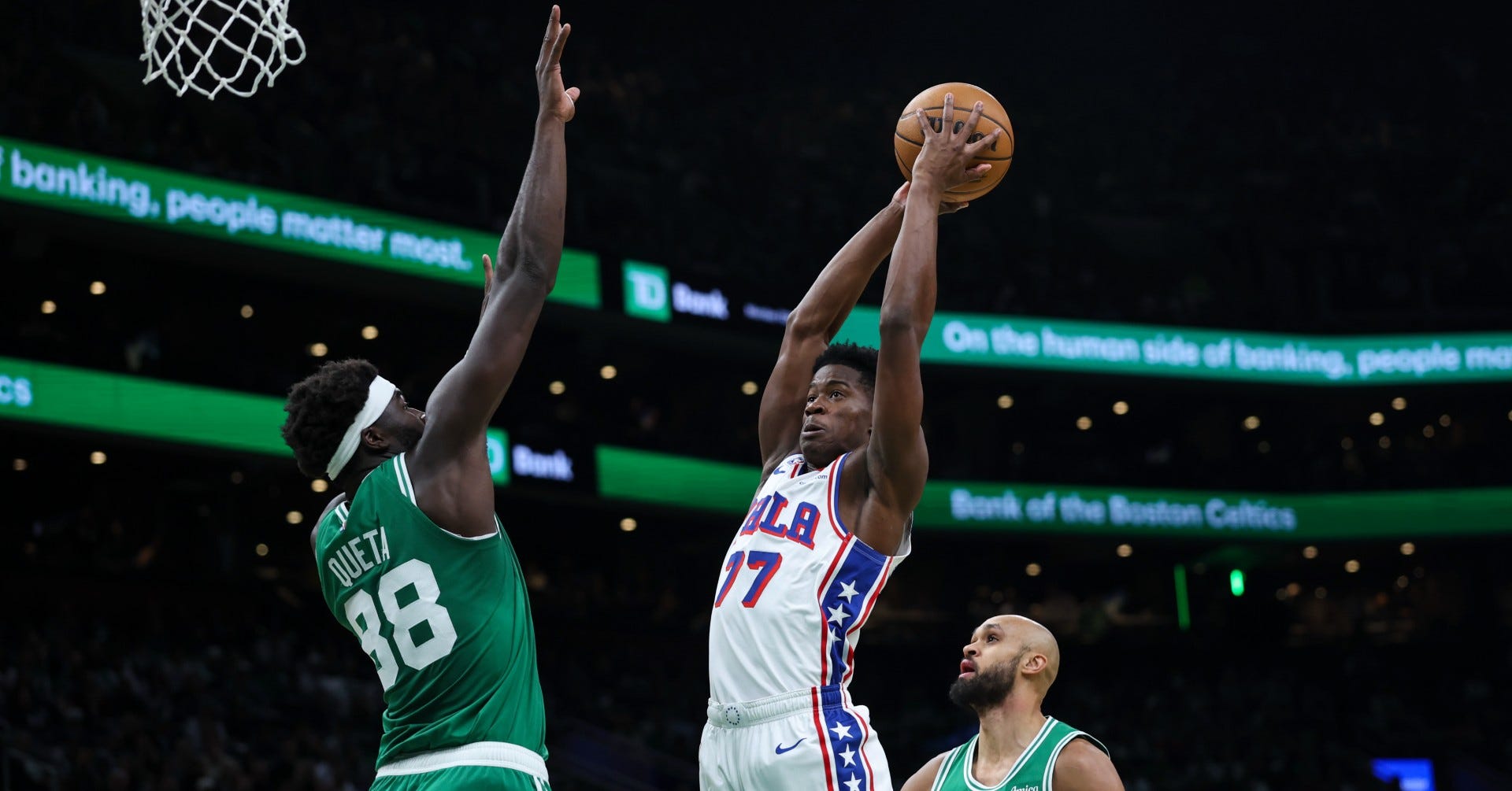
So how are they doing it? The answer is not MVP candidate Tyrese Maxey, ex-MVP Joel Embiid, or the, uh, Eagles parade-inspired Paul George. It’s rookie VJ Edgecombe, just 30 games into his career.

Of course, even in a broader context, VJ has been a positive presence. The Sixers are +3.4 per 100 possessions with him on the floor this season, and they’ve notably held their own even in the VJ minutes when Maxey sits (+1.4) — uncommon stability for a rookie to provide without his co-star. However, it’s late in games where Edgecombe’s impact has exploded.
In high-leverage situations, the Sixers have posted a staggering +33.7 net rating across VJ’s 84 minutes on the floor. That number comes with the usual small-sample caveats, but it illustrates just how extreme his impact has been. For perspective, the 2015-16 Warriors finished their 73-9 season with a net rating of +10.7 overall.
This isn’t VJ simply benefiting from those around him; he’s actively driving their success. Among players with at least 15 clutch attempts, he ranks second in the entire NBA in effective field goal percentage (73.5%), trailing only Anthony Edwards. Built into that number is a ridiculous 58.8% shooting from three, a stunning proposition for a player who entered the league with questions about whether he could consistently shoot at all (though it’s unlikely he will continue to be this good). Add in his defensive impact—VJ leads the Sixers in both steals AND blocks in the clutch — and you have a player who could arguably be a candidate for clutch player of the year.
For a rookie to play heavy clutch minutes and thrive on both ends of the floor is rare in any context. For the Sixers, it’s been the difference between surviving many of these stress-inducing games and losing far more of them.

However, while watching VJ take over games late has been entertaining, this volume of close matchups isn’t harmless. With each fourth quarter turning into a high-leverage situation, Maxey and VJ’s minutes have continued to climb. Maxey is still far and away the league leader in minutes per game, and VJ is not far behind at 6th, playing the most minutes per game (35.8) for a rookie since Andrew Wiggins in 2014-15. When the score is tight in almost every game, Nurse has little choice but to ride his best players, but it adds unavoidable risk given the wear and tear of today’s NBA.
History suggests clutch success is fragile. Winning close games is valuable, but relying on them as a nightly survival strategy isn’t a sustainable formula for either long-term success or player health.

Monday night’s game against a skeleton Nuggets squad was a perfect example of the problem. That matchup should have been over by midway through the 3rd quarter to provide some old-fashioned load management. Instead, Maxey played 46 minutes, VJ played 42, and Joel hit a season-high 40 minutes against a team missing all five of its starters. Even beyond the minutes load, the clear fatigue they were feeling — especially VJ, who had to take off a possession or two in the corner in OT — may have been the difference between a win and a loss.
VJ Edgecombe has given them a remarkable safety net late, but if this start is going to hold over the course of a long season, they need to stop relying on it.

This Sanderson fella might be the real deal! Great read, gotta make sure VJ continues learning in late game situations without outright
putting all the pressure onto him💯
Welcome to RTRS, Beckett. So thrilled to see your byline here.