

Here We Go Again: Breaking Down Keys to the Celtics Series
Beckett goes deep on the brutal Celtics matchup and if there’s any sliver of hope of not being embarrassed in the series.

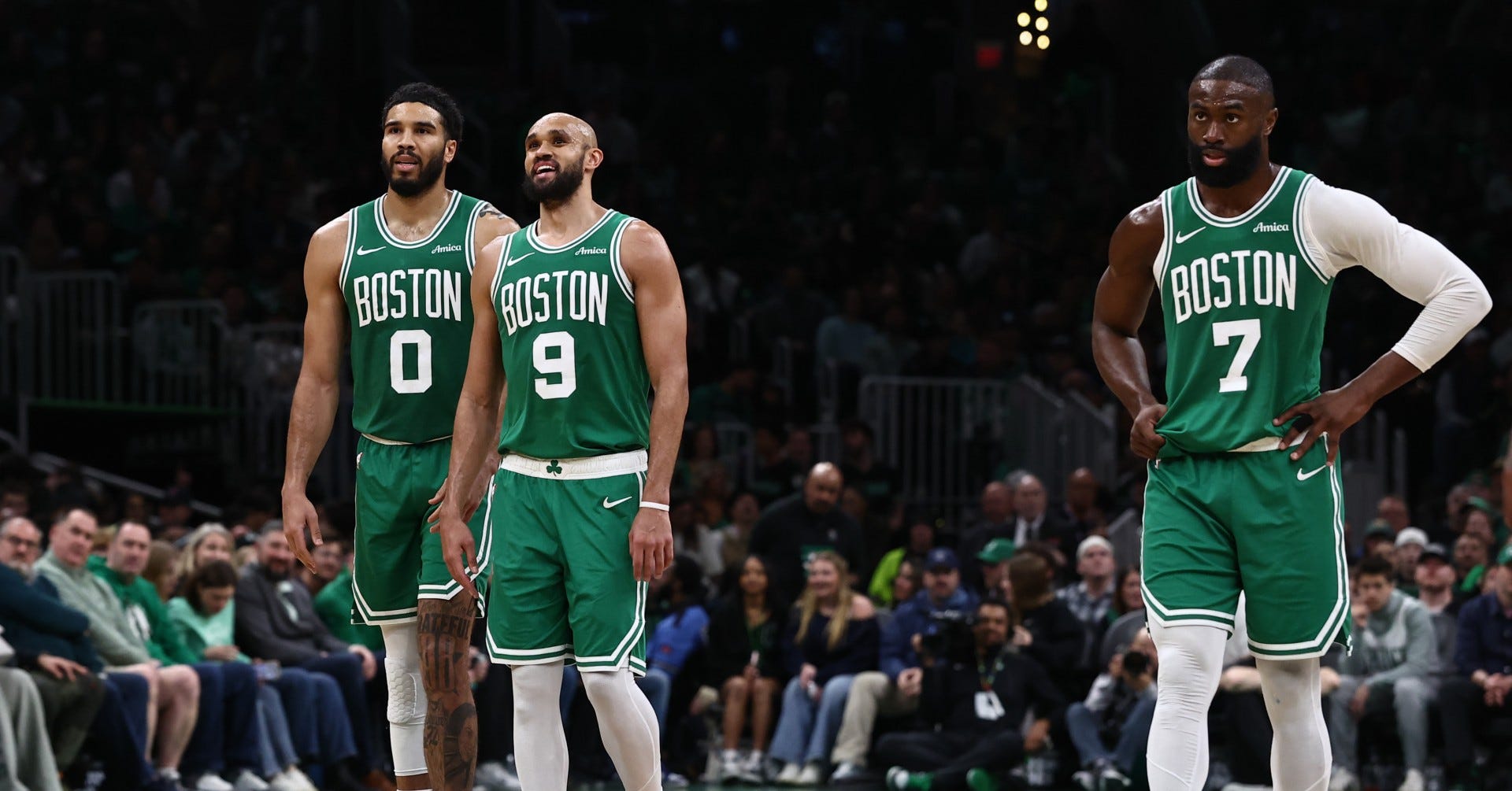
So it’s the Celtics again.
I’m not like Spike in his apparent apathy towards the Celtics. Growing up in Philly, there is a distinct hatred towards the Celtics that’s built into your childhood — and that was before I went to school in Boston the year the Celtics won the championship. So it would mean a great deal to me if the Sixers could bump their playoff series record over the last decade to 1-3 instead of 0-4 in this particular matchup.
Is that likely? No. Honestly, I’m not even sure it’s possible. Fair warning, I’m going to have to crush some hopes and dreams here first before I try to find some optimism. But every game counts, so let’s see if we can outline what the Sixers can do to make this series at least look competitive.
Now you might be a little doubtful of my pessimism, so let’s start first with why this matchup is so challenging in the first place.
For starters, the Celtics are just significantly better than the Sixers, even regardless of the availability of Joel Embiid, ranking fourth in the NBA in net rating (+8.4) and sitting in the top five in the league in both offensive and defensive efficiency. If both teams play to their standard — the Sixers’ standard of course still being their negative net rating of -0.3, good for 18th in the league — we can’t compete.
However, even beyond their general skill, the Celtics are a brutal matchup for a variety of reasons. These are the keys that will decide the series — let’s break them down one by one.

Offensive Rebounding
You thought the Knicks were a bad matchup because of offensive rebounds? The Celtics actually grab a higher percentage of their misses than the Knicks, ranking fifth in the NBA in ORB%. Not only that, but they also rank eighth in scoring efficiency on those putback chances. If the Sixers can’t defensive rebound — and there’s absolutely no reason to think they suddenly will — it’s going to be incredibly difficult to get stops defensively.
Transition Scoring
Not being able to rebound and end possessions also hurts the Sixers’ offense. Beyond steals, defensive rebounds are the best way to get out in the open floor, where Tyrese Maxey and VJ Edgecombe can make a difference. Like most teams, the Sixers have also been much more efficient when playing with pace, with a 126.0 offensive rating in transition (16th in the NBA) compared to just a 96.3 offensive rating in the halfcourt (23rd in the NBA). However, this is another area where the Celtics make for a brutal matchup, as Boston ranks third in the NBA in transition defense, both in efficiency allowed and in limiting transition opportunities overall. Without the ability to get easy buckets in the open floor, I find it difficult to see where consistent offense will come from.
Ball Security
The Sixers’ main defensive strength this year is their turnover creation, ranking eighth in the NBA at creating disruption, and it helps them get out and run. Unfortunately, the Celtics are once again a tough matchup here, ranking second in the league at limiting turnovers offensively. But this is not an area the Sixers can afford to let Boston control.
Given the edge the Celtics already have in the possession battle through offensive rebounding and the way turnovers can spark transition chances, the Sixers need to be able to exert their influence here. If the Celtics control the ball this whole series, we’ll be lucky to get a single game.

Three-Point Shooting (maybe some hope here!)
The Celtics are notorious for getting up a ton of threes — and they followed that strategy once again this year, ranking third in the league in three-point volume, taking nearly 44% of their attempts from beyond the arc (even this is fairly low for them, having taken over 50% of their shots from deep last season). The Sixers, as we all know, just absolutely adore giving up looks from beyond the arc, especially if they can find a way to make sure they’re wide-open ones.
However, within these overarching stats, there’s a bit of an interesting split. While the Celtics are first in the NBA by a mile with their non-corner three-point volume, they actually rank 29th in their volume from the corner itself. The Sixers’ strengths have a similar discrepancy, ranking 14th-lowest in their non-corner three-point volume, but 24th volume allowed from the corner — which makes sense, because that’s typically the shot you concede out of aggressive help and trapping. The Sixers are also fourth in their efficiency allowed on non-corner threes, meaning the matchup from beyond the arc might not be quite as lopsided as it might appear at first glance.
That doesn’t mean the Sixers should feel good about giving up threes — the Celtics shoot over 42% on corner attempts (fourth in the NBA), so please, stop overhelping for one damn series Nick — but it does introduce a path. If the Sixers can keep the ball out of the corner and live with the right shots, there’s at least a version of this series where Boston goes cold for a game or two and gives a glimmer of hope.

Now unfortunately, that’s about as optimistic as I can get in this series. These teams have shown all year how good they are, and I don’t expect a miraculous change now. So try not to get too upset when the Sixers give up three offensive rebounds in a possession (just typing this is making me annoyed, so I don’t know how realistic that is, but give it a shot). Simply enjoy the ride for what it is and find the fun in VJ’s first playoffs or watching Drummond take seven corner threes in a game when Mazulla refuses to acknowledge he’s on the floor. Because at some point, belief has to meet reality, and this series is where that happens.
 | A guest post by
|